The Architecture of Coastal Spaces
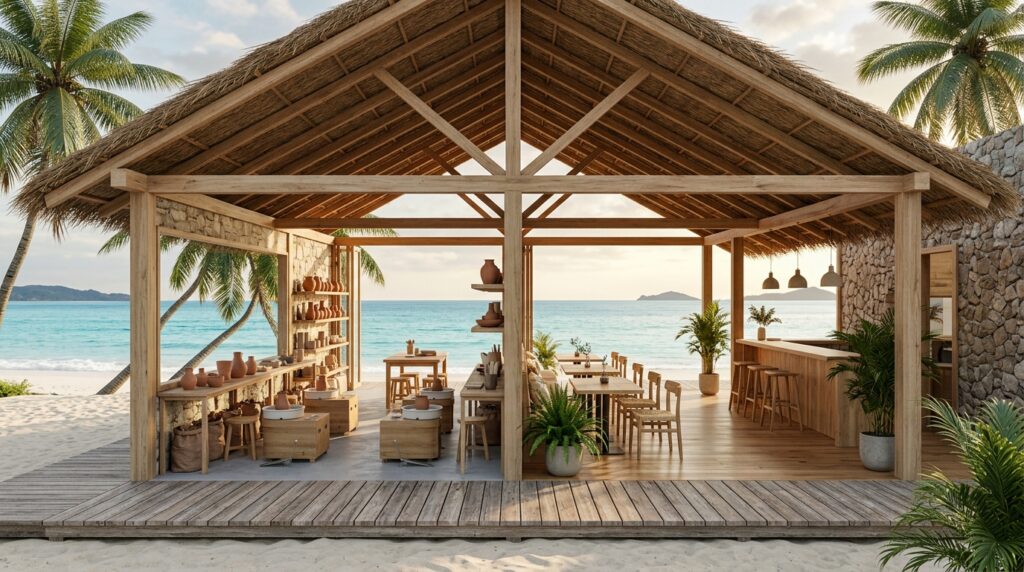
Exploring the northern coast of Tanjung Uban introduces you to an entirely different pace of architectural design, far removed from the polished, mass-produced resorts of the main tourist enclaves. Here, independent seaside cafes are built with a raw, vernacular honesty, utilizing weathered driftwood structures, exposed concrete pilings, and wide-open pavilions that invite the elements inside. Walking through these spaces becomes a lesson in coastal adaptation, observing how local builders manage natural light, block the harsh midday glare, and utilize constant sea breezes instead of artificial air conditioning. Sitting by the water’s edge forces your eyes to adjust to natural horizons and shifting tides, immediately breaking the cognitive fatigue caused by staring at flat digital interfaces. The surrounding environment—characterized by the rhythmic creak of wooden docks, the constant murmur of the surf, and the vast expanse of the ocean—serves as an expansive visual backdrop that quietens a noisy mind.
The Material Transition to Earth
The experience transitions from passive architectural appreciation to deep tactile engagement when you move away from the sea view and sit down at a rustic pottery workbench. Working with raw, unrefined coastal clay introduces a heavy, grounding physical element that demands your complete presence. The cold, wet earth reacts immediately to the slightest change in pressure, forcing you to slow down your movements and synchronize your physical output with the material. As you wedge the clay to remove air pockets and begin shaping it by hand, the constant stream of analytical thoughts and daily stressors is completely replaced by a primitive focus on form, moisture, and structural integrity. There is a profound sense of calm that comes from manipulating raw earth, stripping away the complexities of modern communication and reducing your focus to the direct relationship between your fingers and the malleable medium in front of you.
The Craft of Coiling and Shaping Raw Clay
Transforming a formless lump of clay into a functional vessel requires a patient, methodical building process that honors the natural limitations of the medium. You begin by flattening a thick piece of clay to form a solid, even circular base that will support the entire weight of the structure. Next, you roll out long, even ropes of clay between your palms, ensuring they maintain a uniform thickness from end to end without drying out or cracking. These clay coils are then layered carefully along the perimeter of the base, building up the walls of the vessel one ring at a time. To ensure the structure doesn’t collapse under its own weight, you use your thumbs to smoothly blend the seams of the coils together, fusing the clay into a seamless, unified wall. As the piece grows taller, you gently flare the rim outward or pinch the waist inward, constantly monitoring the moisture levels and wall thickness to create a balanced, organic form that carries the permanent texture of your hands.