The Architecture of Living Traditions
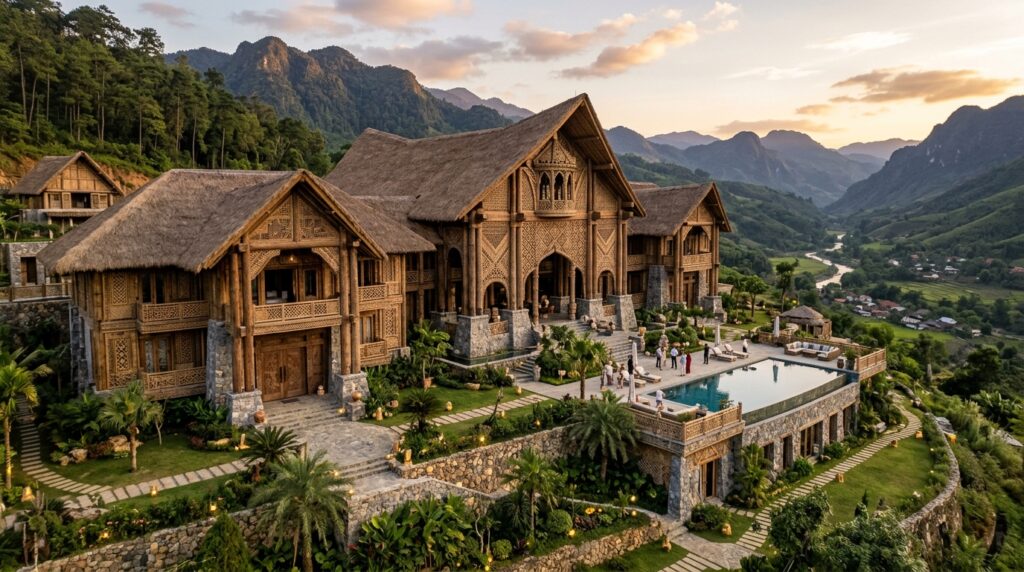
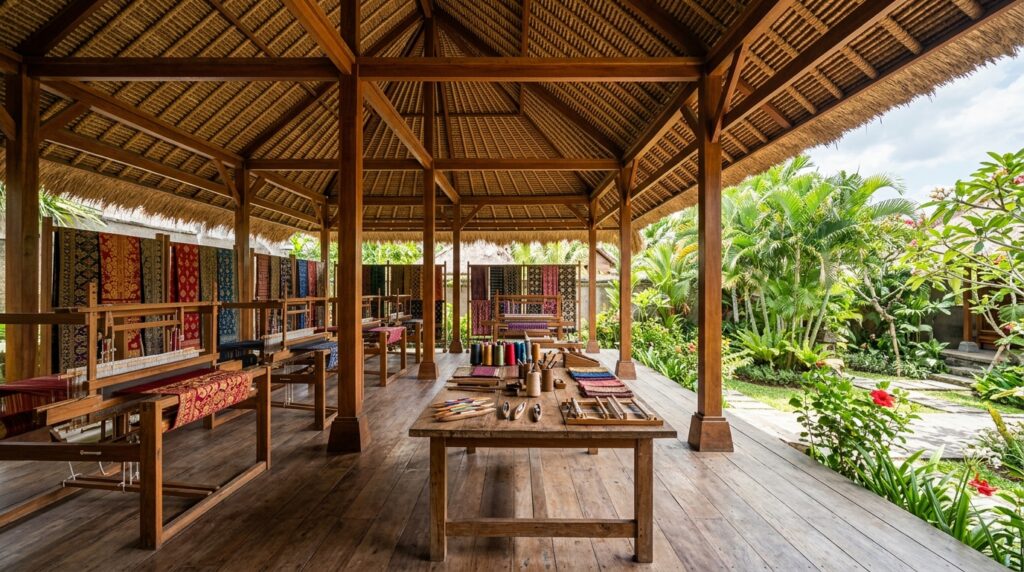
Stepping into the weaving village of Sukarara immediately shifts your perspective from the modern tourist trails of Lombok into a space governed by rhythm, patience, and centuries of preserved knowledge. The village layout itself centers around traditional wooden structures with soaring thatch roofs, designed specifically to shelter the heavy timber looms from the intense tropical sun while allowing ambient daylight to illuminate the workspace. Walking through these open-air pavilions, you are surrounded by the deep, resonant clacking of wooden beams striking against tightly strung threads. It is an environment where time is measured not by clocks or digital notifications, but by the slow, vertical growth of a fabric pattern on a frame. Observing the local weavers work in this space forces your mind to slow down and appreciate the sheer scale of human effort required to build a physical object completely from scratch, using nothing but raw materials and ancestral ingenuity.
The Complex Chemistry of Natural Pigments
The experience deepens as you move past the looms to explore the raw materials that give these heritage textiles their identity. Before a single thread is woven, the cotton must undergo a meticulous, chemical transformation using entirely organic elements harvested from the surrounding Lombok landscape. You spend time analyzing the raw ingredients used to create the vibrant dyes—crushed turmeric roots for deep golds, boiled mahogany bark for rich earthy browns, indigo leaves for deep blues, and local mud treatments to lock in the dark tones. Touching the coarse, unspun yarn and breathing in the distinct, earthy aroma of the boiling dye vats connects you directly to the agricultural roots of the craft. This tactile and olfactory immersion strips away the sterile, synthetic feel of modern consumer goods, grounding your senses in the raw, chemical realities of traditional textile production where nature completely dictates the final color palette.
The Rhythmic Mechanics of the Backstrap Loom
Engaging with the actual process of creating a traditional Songket or Ikat cloth requires a level of physical synchronization that completely consumes your attention. Sitting on the floor and slipping into the heavy leather backstrap loom means your own body weight becomes an active mechanical component of the machine, pulling the warp threads taut with the lean of your torso. You slide a long wooden shuttle carrying the wet, dyed thread horizontally through the separated fibers, listening to the smooth hiss of cotton sliding against cotton. Once the thread is through, you pull a heavy wooden batten toward you with a firm, rhythmic snap to pack the new row tightly against the previous one. This repetitive cycle—leaning back to create tension, throwing the shuttle, beating the thread, and shifting the bamboo rods to change the thread alignment—demands total physical presence, locking you into a meditative state where mental fatigue is entirely replaced by the fluid, percussive cadence of manual creation.