The Geography of the High Caldera
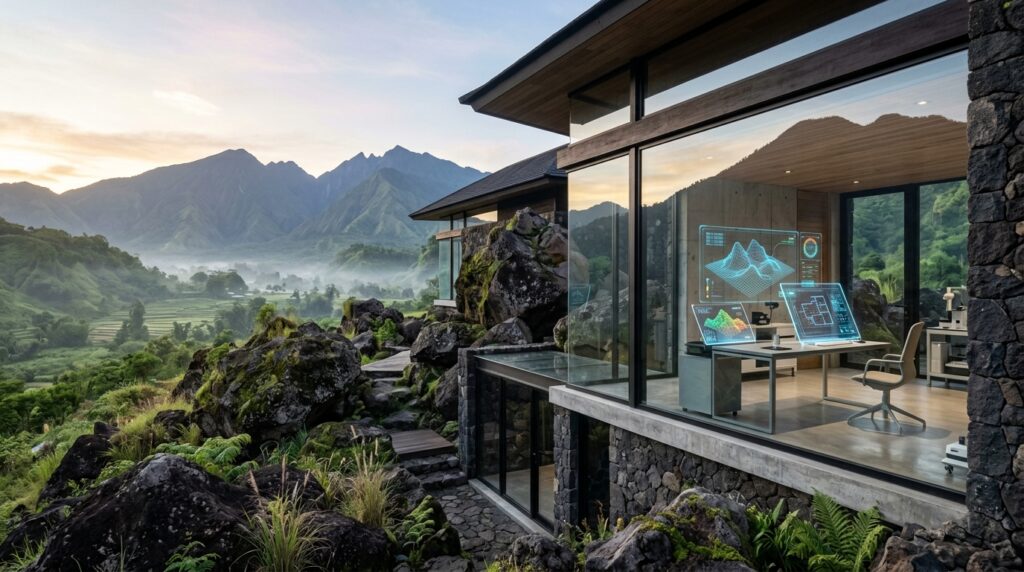
Ascending into the high valley of Sembalun completely changes your spatial perspective, shifting you from Lombok’s coastal tropical warmth into a massive, cool alpine bowl sitting directly in the shadow of Mount Rinjani. The landscape here is defined by immense geological history, where the flat valley floor is abruptly broken by towering, ancient volcanic rock formations and jagged ridges pushed up by centuries of seismic activity. Walking along the base of these massive stone walls allows you to analyze how the cold mountain air patterns circulate through the valley, interacting with the steep topography to create microclimates that sustain unique local agriculture. Spending hours tracking the sharp, geometric lines of the ridges and observing how the shifting afternoon mist wraps around the dark volcanic stone anchors your mind into a deep, environmental perspective, stripping away the triviality of modern digital noise.
The Materiality of Vernacular Architecture
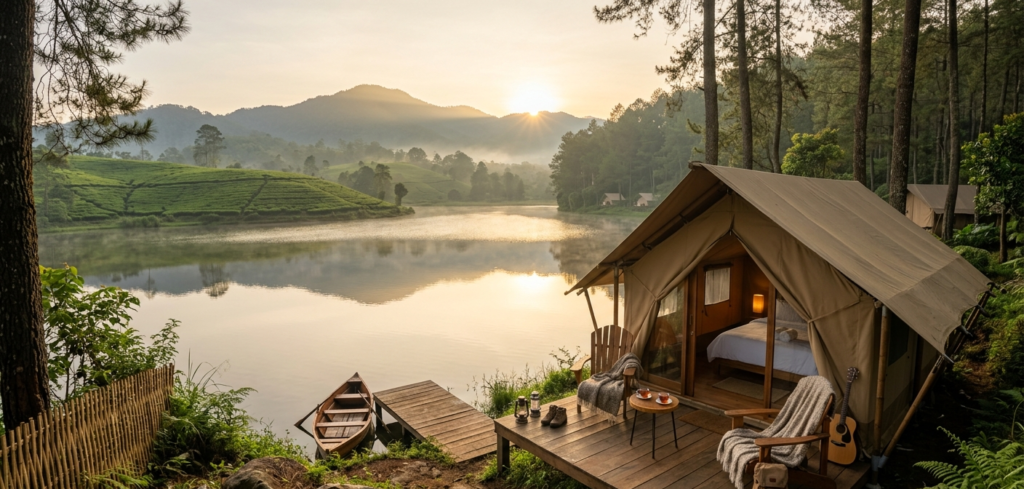
The transition into spatial design becomes clear when you explore the small-scale eco-resorts and mountain lodges that are built directly into the contours of the valley slope. Instead of imposing modern concrete structures onto the landscape, these spaces focus on a deep, structural dialogue with the surrounding environment, utilizing locally sourced split bamboo, rough volcanic stone masonry, and lightweight timber frames. Sitting within these open-plan structures allows you to analyze the principles of passive thermal mass—observing how the heavy stone floors absorb the intense heat of the midday sun and slowly radiate that warmth back into the living spaces during the freezing mountain nights. This immersive architectural study forces you to look at design through the lens of survival and sustainability, grounding your thoughts in the physical realities of material weight, local climate adaptation, and structural honesty.
The Analysis of Sustainable Site Integration
Understanding how a structure coexists with a fragile mountain ecosystem requires looking closely at the hidden systems that keep an eco-resort functioning without disrupting the natural landscape. You study the layout of the property to see how the buildings are stepped carefully down the natural slope, utilizing stilts and terraced foundations to completely avoid heavy excavation and prevent soil erosion during the intense monsoon seasons. Next, you analyze the water management loops, tracking how rainwater is harvested from the wide, angled thatch roofs and channeled into natural filtration beds made of volcanic gravel and local sand before being reused. Finally, you observe the strategic placement of window openings and wide overhangs, which are mapped precisely to harness the prevailing valley winds for natural ventilation while framing the dramatic peaks of Rinjani, creating a seamless visual and physical connection between the indoor guest and the raw mountain wilderness.