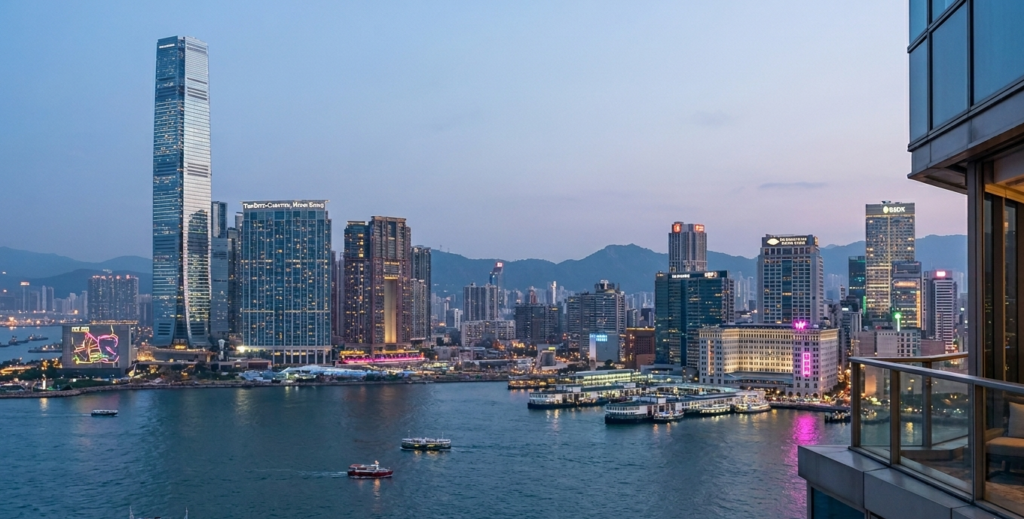
In Hong Kong, luxury is measured by altitude. Here, architects don’t build outward; they reach for the clouds, creating “Vertical Sanctuaries” that provide an escape from the frantic energy of the streets below. These hotels are masterpieces of Urban Engineering, utilizing steel and glass to create transparent palaces. From high-speed elevators that feel like spacecraft to infinity pools that seem to pour into the harbor, these ten hotels represent the pinnacle of futuristic urban living.
1. The Ritz-Carlton, Hong Kong: The Highest Hotel in the World
Occupying floors 102 to 118 of the International Commerce Centre (ICC), this is the literal peak of luxury. The architecture is defined by Extreme Verticality. Staying here means living above the clouds, where the world’s highest bar, Ozone, features a futuristic, honeycomb-inspired design. It’s a masterclass in “Sky-High Engineering.”
2. The Rosewood Hong Kong: The Vertical Estate
Rising above the Victoria Dockside, the Rosewood reimagines the skyscraper as a “Manor House” in the sky. The design blends Modernist Glass with lush, terraced greenery. For a designer, the contrast between the dark, gridded exterior and the incredibly soft, artistic interiors provides a lesson in “Sophisticated Contrast.”
3. The Upper House: The Minimalist Monolith
Designed by André Fu, this hotel is a sanctuary of “Quiet Futurism.” Located high above Pacific Place, the design removes all the clutter of a traditional hotel. There is no reception desk—only sleek, wood-paneled escalators that lead to rooms with massive windows framing the harbor like high-definition screens.
4. W Hong Kong: The Neon Kinetic
Located in the West Kowloon district, the W is a tribute to Metropolitan Energy. The architecture is bold and irreverent, featuring a rooftop pool on the 76th floor with a massive mosaic wall. The design uses “Kinetic Elements” and vibrant lighting to mimic the restless pulse of Hong Kong’s street life.
5. The Murray: The Architectural Rebirth
This is a stunning example of Sustainable Retrofitting. Originally a 1960s government building, its iconic recessed square windows were designed to deflect the tropical sun. The redesign has turned it into a futuristic white monolith that blends brutalist heritage with ultra-modern luxury.
6. Four Seasons Hotel Hong Kong: The Glass Fortress
Situated in the IFC complex, this hotel is the heart of the financial district. Its design is a study in Transparency. The floor-to-ceiling windows are engineered to be so clear they almost disappear, making the skyline feel like it’s part of your living room furniture.
7. The St. Regis Hong Kong: The Architectural Jewelry Box
Designed like a curated gallery, the St. Regis uses Geometric Precision to create a sense of grand scale. The high ceilings and sharp architectural lines are reminiscent of Hong Kong’s diamond-cut skyscrapers, blending “New York Glamour” with “Hong Kong Futurism.”
8. Landmark Mandarin Oriental: The Urban Boutique
Located inside a glass-and-steel tower in Central, this hotel focuses on Intimate Tech-Luxury. The rooms are designed like high-end “Command Centers” with state-of-the-art automation, wrapped in a palette of metallic silks and polished stone.
9. Kerry Hotel, Hong Kong: The Horizontal Skyscraper
While still a high-rise, the Kerry focuses on Interconnected Levels and massive outdoor terraces. It was designed to bring the “outside in,” using huge glass walls that provide an unobstructed, low-angle view of the harbor that feels more “connected” to the water than the higher towers.
10. Hotel ICON: The Vertical Garden Lab
Owned by the Polytechnic University, this is a “Living Laboratory” of design. It features one of the world’s largest vertical indoor gardens in the lobby. The architecture is experimental, showcasing how “Green Tech” can be integrated into a high-density skyscraper environment.