- Location: Toapaya Agricultural Valley, Central Pulau Bintan
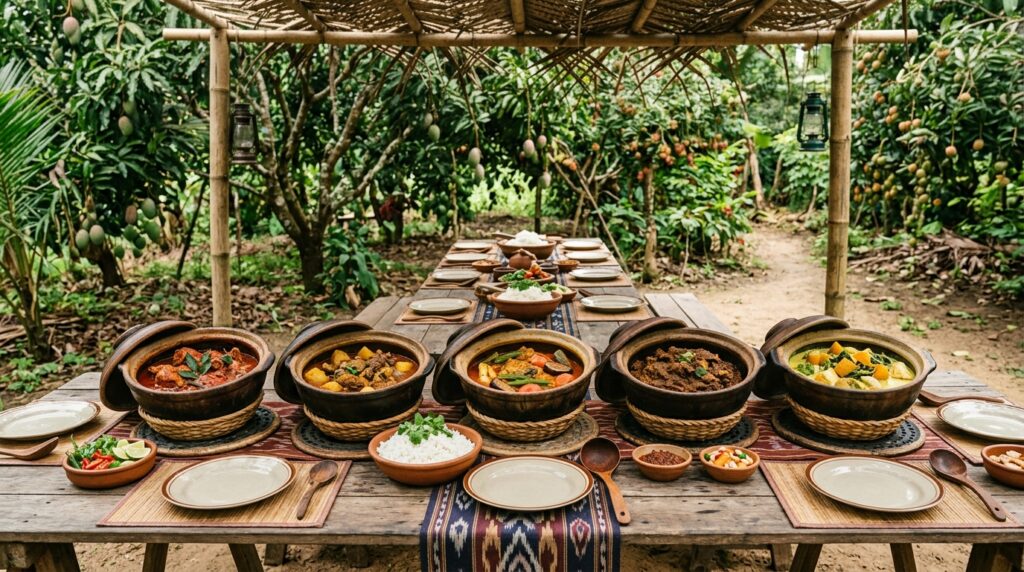
Deep within the fertile interior of Bintan, away from the coastal maritime lanes, lies Toapaya—a lush, rolling valley of ancestral fruit orchards and traditional spice gardens. For generations, this agricultural heartland has preserved the authentic inland culinary heritage of the Riau Malays, centered around the slow, open-fire cooking of complex spice pastes. These five dining journeys take you deep into the shade of mature durian and rambutan groves, where you will join a communal longtable feast, watch local families roast spices over split rubber-wood embers, and savor rich heirloom curries slow-simmered in heavy clay pots.
1. The Durian Canopy Longtable Gathering
The culinary journey begins as you walk down a narrow dirt path flanked by towering, century-old durian trees to a massive communal longtable crafted from a single slab of fallen jackfruit wood. The table is set in a secluded clearing right in the middle of a working family orchard. As the afternoon sun filters gently through the thick canopy leaves, you will take a seat alongside fellow travelers and village elders. The meal begins with a refreshing glass of iced nutmeg juice, harvested from the trees surrounding your seat, setting a warm, deeply welcoming tone for the traditional communal feast ahead.
2. The Rempah Mortar-and-Pestle Masterclass
Before the fires are lit, this hands-on workshop immerses you into the aromatic foundation of Riau Malay cuisine: the Rempah (spice paste). Sitting on a low wooden bench next to a village grandmother, you will discard modern blenders and use a heavy, hand-carved stone mortar and pestle to grind fresh ingredients harvested from the backyard garden. You will rhythmically pound thick slices of wild galangal, lemongrass stalks, turmeric roots, and bird’s eye chilies until they form a smooth, vibrant orange paste. The friction releases an intense, intoxicating burst of essential oils, teaching you the precise aromatic balance required for a true heritage curry.
3. The Rubber-Wood Firepot Simmer
This active kitchen experience moves you over to the open-air hearth, where rows of traditional, heavy clay pots (belanga) sit balanced over glowing charcoal braziers fueled by split rubber-wood logs from the nearby plantations. You will assist the cooks in tossing your handmade spice paste into the hot clay pot with fresh coconut milk squeezed on-site. The signature dish features tender pieces of free-range village chicken and soft chunks of green jackfruit. Watching the rich curry slowly bubble and reduce over the wood fire allows the clay walls of the pot to infuse the broth with a distinct, earthy smokiness that cannot be replicated on modern stoves.
4. The Foraged Fern Leaf Side-Dish Harvest
While the main clay pots slow-cook over the embers, this brief interlude takes you on a foraging walk along the damp banks of a freshwater stream that snakes through the orchard. Under the guidance of a local farmer, you will look for and hand-harvest the tender, curled tips of wild Paku (river ferns) and fragrant kaffir lime leaves. Returning to the longtable, these fresh greens are lightly tossed in a hot iron wok with grated coconut, shallots, and lime juice to create a crisp, vibrant salad (Urap). The clean, peppery crunch of the wild ferns provides the perfect palate-cleansing contrast to the rich, heavy curries.
5. The Charcoal-Ember Banana Roast Rest
The final culinary experience takes place as night falls over the Toapaya valley and strings of warm lanterns illuminate the longtable. After finishing the heavy curry feast, the remaining glowing embers of the cooking fires are used to slow-roast whole, unpeeled Pisang Kepok (local starch bananas). The heat caramelizes the natural sugars inside the skin, turning the fruit incredibly sweet and soft. Served alongside a steaming cup of strong, black coffee spiced with cracked ginger and cloves, enjoying this warm dessert while listening to the evening symphony of the orchard forest provides a beautiful, deeply satisfying conclusion to your journey through Bintan’s spice heritage.