- Location: Rembiga Culinary District, Northern Mataram, Lombok
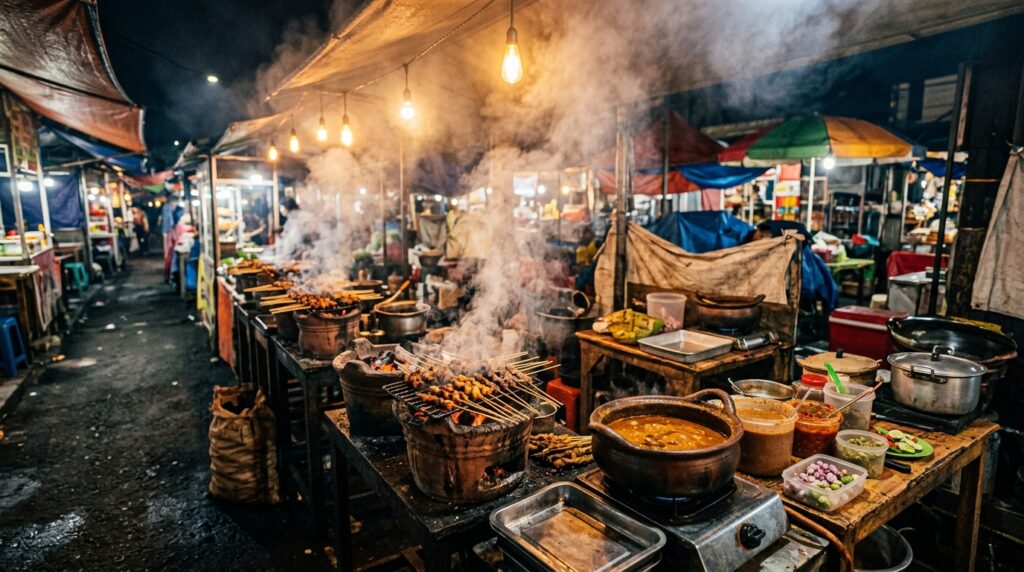
As darkness falls over the wide, tree-lined boulevards of northern Mataram, the commercial district of Rembiga transforms into a high-energy, smoke-filled culinary theater. Far removed from the quiet beachside resorts, this lively urban corridor is the birthplace of Lombok’s most legendary street food: Sate Rembiga. These five nocturnal dining steps invite you to dive directly into the heart of the city’s skena urban, taking a seat on low plastic stools right along the vibrant roadside pavement to watch master grillers navigate walls of thick charcoal smoke, serving intensely spiced meats alongside hot claypots of local street broths.
1. The Charcoal Cloud Navigation
The late-night dining journey begins with a walk down the neon-lit sidewalks of Jalan Yos Sudarso after 8 PM. The entire urban corridor is blanketed in a thick, fragrant haze of sweet wood smoke rising from dozens of closely packed street-side stalls. Navigating past lines of parked scooters, you locate a premier open-air grilling station. Finding a seat on a simple bench right at the edge of the pavement, you are instantly immersed in the authentic, raw energy of Mataram’s midnight food culture—where the steady hum of passing traffic blends with the rhythmic clatter of metal skewers.
2. The Sweet-Chili Glaze Sear
The focal point of the roadside stall is a long, narrow iron trough packed with glowing mounds of compressed coconut-shell charcoal. You will watch the griddle master prepare skewers of lean, hand-cut local beef that have been marinating for hours in a fiery paste of crushed red chilies, brown palm sugar, garlic, and wild tamarind pulp. As the skewers are placed directly over the white-hot embers, the dripping juices create bursts of flame that caramelize the outer sugars into a sticky, dark-red crust. The intense sensory display provides an unforgettable preview of the sweet-and-spicy flavor profile to come.
3. The Claypot Ares Simmer
As the satay sears on the grill, the secondary course is served in a heavy, soot-stained earthenware claypot resting on a small charcoal brazier. Inside bubbles a rich, dark-green urban broth known as Jangan Ares—a traditional Sasak soup utilizing a base of thinly sliced, tender core of young banana stems cooked down with rich coconut milk, galangal, lemongrass, and a heavy blend of local upland spices. Sampling the boiling, savory broth directly out of the clay vessel delivers a deep, complex earthiness that perfectly balances the intense chili heat of the grilled skewered meats.
4. The Manual Lontong Press
This essential hands-on segment introduces the structural accompaniment to your urban feast: Lontong (dense, banana-leaf-wrapped rice cakes). On a small wooden platter next to your bench, you will unwrap the tightly packed cylinder of rice, slicing it into thick, pale-green wheels using a small bamboo knife. You will learn the local method of sliding the hot, smoky beef directly off the wooden skewer, pressing it into the dense rice cake, and wiping up the residual sweet-chili oil left on the leaf. The physical texture and the explosive heat command your absolute focus.
5. The Roadside Coconut Decompression
The final dining stage takes place during the late-night hours as the traffic begins to thin out and the air turns cool. Leaning back against a brick storefront, you will be served a warm glass of Tuak Manis—a fresh, non-alcoholic unfermented sweet sap harvested daily from the blossoms of local sugar palms, served hot in a rough-cut coconut shell with a stick of charred cinnamon. Watching the last embers of the street grills die down into soft grey ash while the city settles into a quiet midnight hum brings a deeply satisfying, grounding close to your Mataram food safari.