- Location: Sunda Kelapa Historic Port, North Jakarta
When night falls over the timber-scented waters of Jakarta’s oldest maritime gateway, the industrial clatter of the day fades into a raw, atmospheric twilight. Sunda Kelapa’s historic harbor is famous for its long, imposing line of traditional wooden Phinisi cargo ships that sit high in the dark water. In the shadow of these massive hulls, away from the modern dining districts, a legendary nocturnal culinary subculture operates along the weathered stone docks. These five unpretentious dining journeys invite you to sit on low wooden benches right at the water’s edge, watching fresh catches seared over intense charcoal fires and savoring complex, spice-heavy broths cooked slowly in clay vessels.
1. The Phinisi Shadow Approach
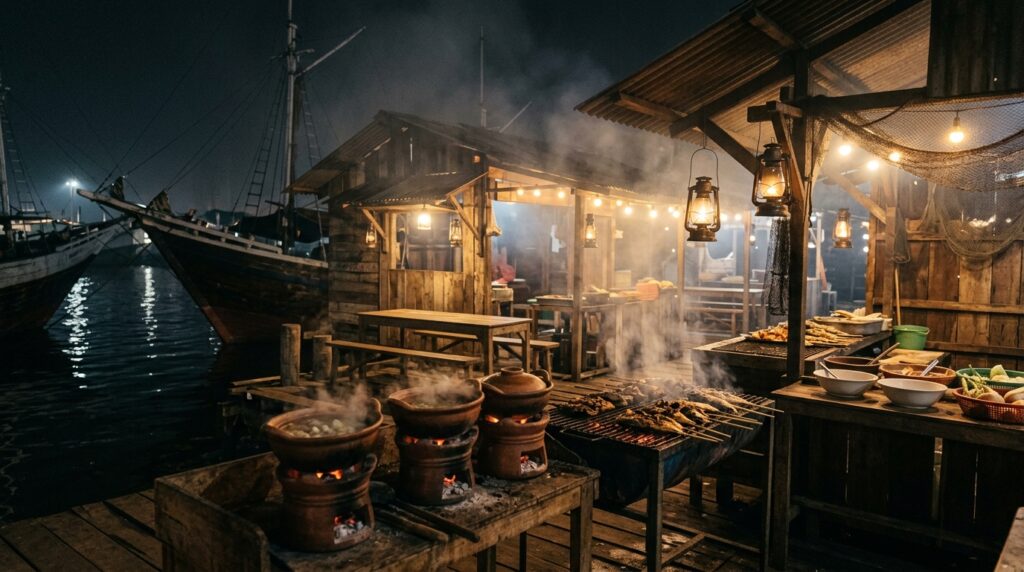
The culinary journey begins with a slow walk along the dark, unlit stone wharf of the old port just after 9 PM. The sky is completely dominated by the towering, curved prows of the wooden schooners docked side-by-side. Navigating past heavy mooring lines and stacks of raw timber, you locate a secluded, open-air cooking station illuminated only by the warm orange glow of burning coals. Settling onto a simple wood-plank bench with the brackish water of the harbor lapping gently against the stone dock just inches away, you are instantly immersed in a gritty, historic maritime landscape.
2. The Coconut-Shell Fire Sear
The focal point of the dockside shack is a long, heavy iron trough packed with glowing embers of compressed coconut shells. This specific fuel burns with an incredibly clean, intense heat that instantly locks in natural juices while imparting a rich, sweet smoke profile. You will watch the griddle master prepare a fresh, hand-line caught white snapper, scoring the thick skin with a heavy knife, slathering it in a thick paste of crushed shallots, turmeric, and local candlenuts, and placing it directly over the open fire. The sizzling sound of fish oils hitting the hot coals provides an authentic, high-sensory preview of your meal.
3. The Tamarind-Claypot Slow Simmer
As the fish sears on the grill, the secondary course arrives in a heavy, unglazed earthenware claypot that has been resting directly on a bed of low-heat charcoal. Inside, a rich, dark-orange broth known as Pindang Serani bubbles slowly. This traditional coastal soup utilizes a sharp, sour-and-spicy base infused with bruised lemongrass, charred ginger, wild bird’s eye chilies, and slices of green starfruit and tamarind. Sampling the piping hot, aromatic broth out of the clay vessel delivers an immediate, palate-cleansing explosion of acidity that beautifully cuts through the rich, smoky flavors of the grilled seafood.
4. The Sweet-Soy Chili Crush
This essential, hands-on segment introduces the core condiment of Jakarta’s maritime dining: Sambal Kecap. On a small granite mortar next to your bench, a raw mix of fiery green chilies, shallots, and key lime juice is roughly bruised and drowned in a thick, dark local sweet soy sauce. You will learn the traditional method of pulling the tender, white flakes of smoky fish directly off the bone with your fingers, dipping it deep into the sweet-and-spicy soy reduction. The intense contrast between the caramelized outer skin, the juicy meat, and the sharp chili heat commands your absolute sensory focus.
5. The Wharf-Line Twilight Decompression
The final dining stage takes place during the quiet, late-night hours as the open cooking fires begin to die down to soft ash. Free from the rush of standard city restaurants, you can lean back against a timber piling with a warm mug of Wedang Secang—a traditional herbal infusion brewed from shaved sappan wood, cinnamon, and ginger that glows a deep crimson color in the low light. Watching the gentle, rhythmic rocking of the Phinisi masts against the dark, starless Jakarta sky while listening to the distant hum of the shipping lanes provides a peaceful, grounding conclusion to your offshore harbor feast.