
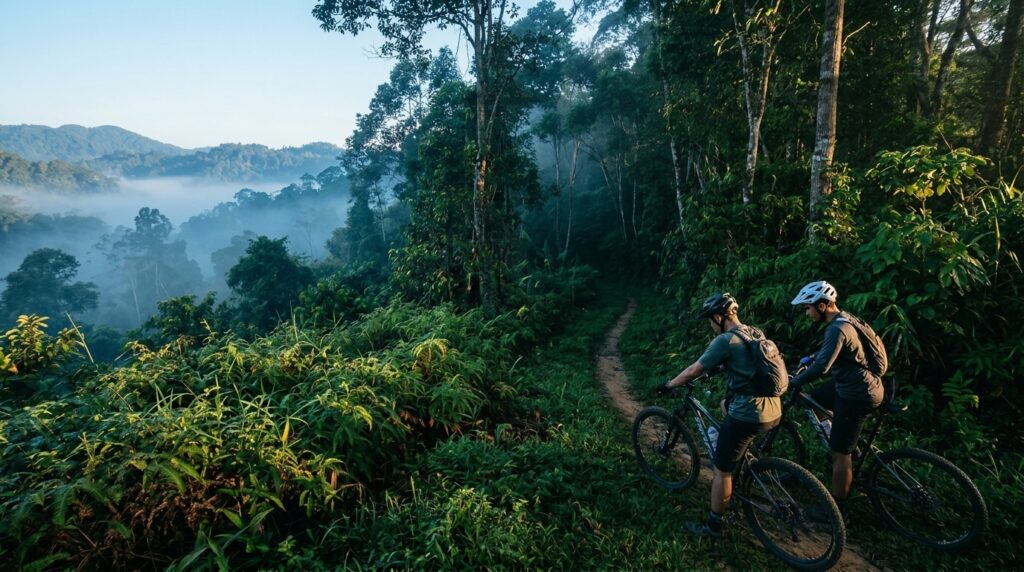
Long before Bintan became known for its luxury beaches, its interior was defined by a thriving, old-world industrial economy. Deep within the coastal forests of Kelong Village stand the ruins of the Dapur Arang—massive, brick dome kilns shaped like giant igloos that were used for centuries to slow-burn mangrove wood into high-grade charcoal. These five historical biking treks take you down rugged red-clay tracks, through old rubber plantations, and along forgotten coastal paths to discover these striking architectural remnants, offering a rugged, educational journey into the island’s deep labor history.
1. The Dome Labyrinth Ride
This historical trek begins at the main entrance of Kelong Village in the Bintan Pesisir district, instantly plunging your mountain bike onto a narrow single-track trail made of packed red earth. The path winds through a dense secondary forest before opening up into a clearing where a row of massive, abandoned brick kilns stands reclaimed by creeping vines and wild ferns. You can park your bike and step inside the high, arched brick chambers, feeling the cool, damp air and smelling the faint, sweet scent of ancient wood smoke that still lingers in the porous clay walls. It is a striking, high-contrast look at early industrial design, hidden deep within a peaceful green jungle.
2. The Coastal Mangrove Track
Following an old, unpaved loggers’ path that traces the edge of the tidal flats near the Kelong river mouth, this route challenges your biking skills over exposed tree roots and patches of soft sand. The trail was originally constructed by workers to haul heavy mangrove logs from the water to the burning sites using crude wooden carts. Riding this path requires a steady momentum and quick balance adjustments, offering beautiful views of the coastal wetlands on one side and the crumbling brick structures of the old kilns on the other. The physical effort of the ride connects you directly to the raw, challenging environment where the old charcoal burners spent their lives.
3. The Rubber Plantation Cruise
This rolling, scenic route takes you away from the coast and into the vast, whispering rubber plantations that border the Kelong district in southeastern Bintan. Riding beneath the neat, endless rows of mature rubber trees provides a deep, dappled shade that keeps the temperature cool even during the midday sun. The trail follows the historical transport routes used to bring supplies to the kiln workers, passing old wooden homesteads and small family temples that have stood for generations. The smooth, flowing single-track allows you to build speed, offering a fun, rhythmic ride through a peaceful agricultural landscape that tells another story of Bintan’s land history.
4. The Brickmakers’ Ridge Climb
For a more physically demanding journey, this route tackles a steep, rocky ridge that overlooks the old kiln production sites of Kelong Village. The trail is made of loose shale and broken pieces of clay bricks that were discarded during the construction of the domes over a century ago. Climbing this technical path requires a low gear and a strong focus on your line, working your muscles as you ascend through the thick brush. Reaching the summit of the ridge rewards you with a spectacular, elevated view of the entire Kelong river basin, showing how the old industrial sites were strategically positioned along the waterways to transport goods to Singapore and beyond.
5. The Estuary Jetty Finish
The final biking trek follows a flat, fast coastal track that finishes at a long, weathered concrete jetty once used as the main loading dock for the charcoal cargo boats. After hours of riding through the jungle and ruins, you can coast out onto the open pier, letting the cool sea breeze from the strait lower your body temperature. The jetty offers a perfect vantage point to look back at the green shoreline, where the red brick domes of the kilns peek through the treetops. Sitting on the edge of the concrete with your bike resting beside you provides a calm, satisfying conclusion to a journey that bridges the gap between wild nature and industrial history.