- Location: Dapur Arang Busung Historical Site, Western Pulau Bintan
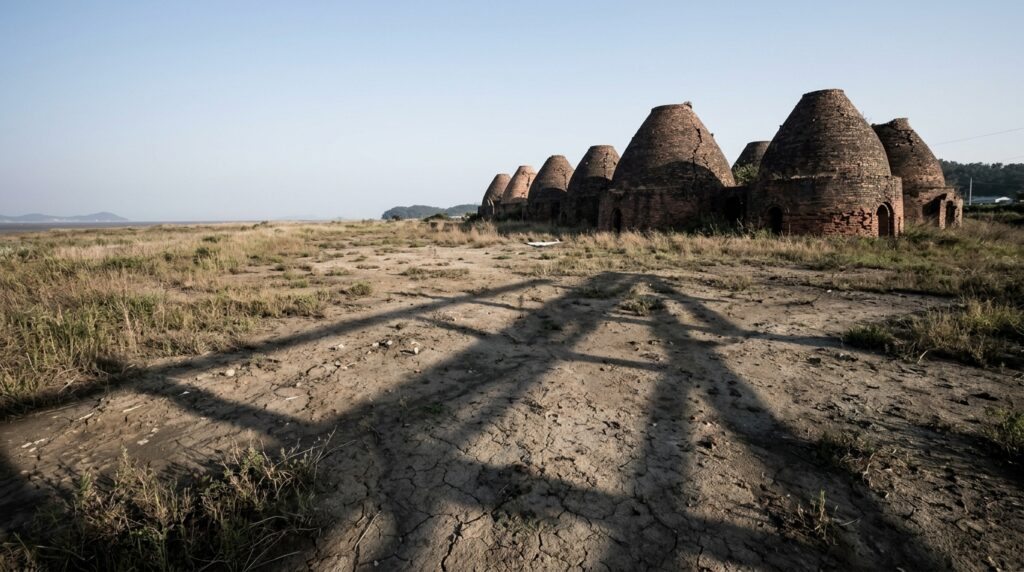
Hidden inside the rural landscape of western Bintan, away from the coastal resorts, lies a striking architectural anomaly that looks like an ancient, forgotten desert outpost. The historic charcoal kilns (Dapur Arang) of Busung are a collection of massive, igloo-shaped brick dome structures built by early Chinese-Malay settlers in the mid-20th century. Once used to slowly bake mangrove wood into high-grade charcoal for regional trade, these industrial structures were completely abandoned decades ago due to environmental conservation laws. These five focused photography and heritage trails invite you to explore the silent, red-brick interiors of these domes, capturing the dramatic interplay of light and shadow slicing through their weathered clay frames.
1. The Dawn Dome Silhouette Shoot
This architectural exploration begins in the cool, silent hours of early morning as the first light of dawn touches the Busung hills. Approaching the site across a low-lying field of wild ferns, the massive, three-meter-high brick domes rise out of the morning fog like silent monuments from another world. The photographic focus here centers on capturing the heavy, textured silhouettes of the curved clay structures against the soft, pastel hues of the morning sky. Walking slowly around the exterior perimeter allows you to map the geometric symmetry of these industrial relics before the heat of the day sets in.
2. The Ocular Light-Beam Study
Moving into the heart of the historic complex, this technical session takes you inside the largest, fully intact brick dome. The only light source enters through a single, circular opening—the chimney hole—at the absolute peak of the curved ceiling. As the morning sun rises higher, a sharp, solid beam of light cuts through the dark, soot-stained interior, illuminating the fine dust particles floating in the air. Standing inside the cool, hollow space with your camera positioned on a low tripod, you will use a long-exposure setting to frame this high-contrast, cinematic ray of light as it slowly crawls across the curved brick floorboards.
3. The Soot-Grained Texture Walk
This grounding, close-up study focuses entirely on the raw physical materials that have survived decades of abandonment and tropical weather. Running your hands over the inner walls of the kilns, you will feel the rough, uneven texture of the local red clay bricks, still coated in a dense, glassy layer of black carbon soot from the final fires of the 1900s. The photographic challenge here is macro-focused: using a shallow depth of field to capture the intricate patterns of moss and green ferns that are slowly growing out of the cracked, black mortar, documenting nature’s slow reclamation of an industrial site.
4. The Archetypal Archway Frame
This segment targets the low, arched entry tunnels where laborers once manually stacked heavy logs of mangrove wood inside the baking chambers. Kneeling at the mouth of these narrow brick portals, you will use the physical architecture of the archway as a natural frame to shoot outward. The view from inside the dark, enclosed dome looking out toward the bright, sun-bleached white sand dunes and green acacia trees of Busung creates a powerful, high-contrast visual contrast that beautifully balances industrial history with the surrounding tropical wilderness.
5. The Twilight Embers Decompression
The final heritage trail takes place during the late-afternoon golden hour as the sun drops behind the western ridges, casting long, dramatic geometric shadows across the brick complex. Free from your camera gear, you can sit on a smooth granite boulder outside the main row of domes to enjoy a simple, grounding highland refreshment: a warm mug of unsweetened local green tea paired with a piece of roasted cassava wrapped in banana leaves. Watching the red bricks of the domes turn a deep, burning orange in the final sunlight provides a peaceful, reflective conclusion to your journey through Bintan’s hidden industrial past.