
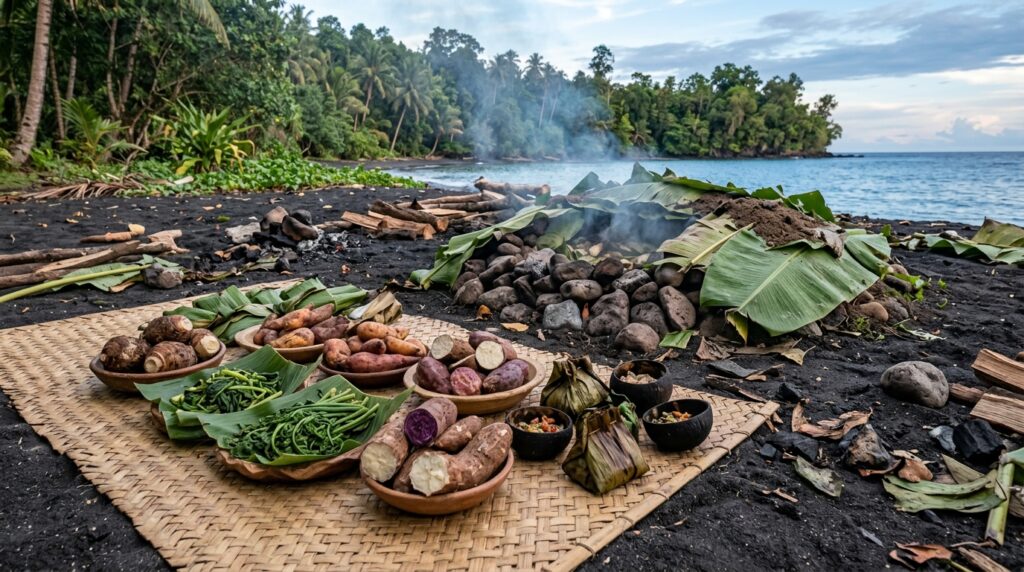
- Location: Sawinggrai Coastal Fringe, Raja Ampat
Along the quiet, coconut-fringed coast of Sawinggrai Island, the rhythm of daily life is deeply bound to ancient culinary traditions that predate modern kitchen technology. Here, the shoreline is defined by a rare stretch of mineral-rich black volcanic sand that absorbs and retains the fierce equatorial heat. These five slow-paced culinary journeys invite you to step onto this coastal edge and participate in the preparation of a traditional Bakar Batu (Earth Oven)—an ancient method of slow-cooking wild-foraged roots, native tubers, and fresh catches using stones heated directly in an open hardwood fire and buried deep beneath the sand.
1. The Volcanic Sand Pit Excavation
The culinary journey begins in the early afternoon on the damp, shaded boundary where the jungle meets the black-sand beach. Working alongside a Sawinggrai elder, you will use a smooth timber shovel to dig a wide, circular trench exactly half a meter deep into the heavy sand. The location is chosen specifically for its proximity to the high-water mark, where the sand remains packed with mineral moisture. Digging the earth pit by hand connects you immediately to the physical terrain, preparing the raw, natural canvas required for this primal, slow-cooking process.
2. The Hardwood Stone Ignition
While the pit sits ready, this highly active segment centers on building the massive heating pyre nearby. You will gather split logs of local Bakau (mangrove wood) and heavy, porous volcanic river stones. The logs are stacked in a precise geometric grid with the stones balanced carefully on top before the fire is ignited. You will watch the flames turn the dark stones into glowing, white-hot embers over the course of two hours. The intense heat releases a rich, clean wood smoke that seasons the stones, creating the essential thermodynamic engine that will power your subterranean oven.
3. The Foraged Root Assembly
Before the burial begins, you will prepare the raw ingredients on wide sheets of fresh, green banana leaves. This menu is entirely derived from the local ecosystem: heavy wild taro roots (Keladi), sweet sweet potatoes, foraged cassava, and fresh ocean groupers stuffed with wild ginger stalks and lemongrass. Under the guidance of the local cooks, you will learn the precise art of wrapping each item tightly in multiple layers of leaves, tying them securely with split hibiscus bark fibers. This natural packaging ensures the food steams perfectly inside its own juices without scorching against the hot stones.
4. The Subterranean Burial Layering
With the ingredients wrapped and the stones glowing hot, the assembly process requires fast, coordinated physical movement. Using long green bamboo tongs, you will transfer a thick layer of the white-hot stones into the base of the sand pit. Next, the banana leaf parcels are laid directly over the heat, followed by another heavy layer of burning stones. Finally, the entire structure is sealed completely under a thick mound of the damp black volcanic sand. Once buried, the steam is trapped entirely underground, initiating a silent, two-hour slow-cook cycle that commands your patient anticipation.
5. The Earth-Hearth Dusk Unearthing
The final dining stage takes place as the sun dips below the Western Raja Ampat horizon, casting long crimson shadows across the water. Using your hands and wooden tools, you will carefully brush away the hot sand to reveal the steaming banana leaf parcels. Peeling back the charred leaves releases an incredible, fragrant cloud of caramelized root starch, wild ginger, and clean wood smoke. Eating the incredibly tender, slow-cooked feast directly off the leaf platters while sitting on the warm sand, watching the embers fade as the night sky settles over the bay, brings a deeply grounding close to your primal culinary safari.