Urban Aesthetics / Cultural Travel
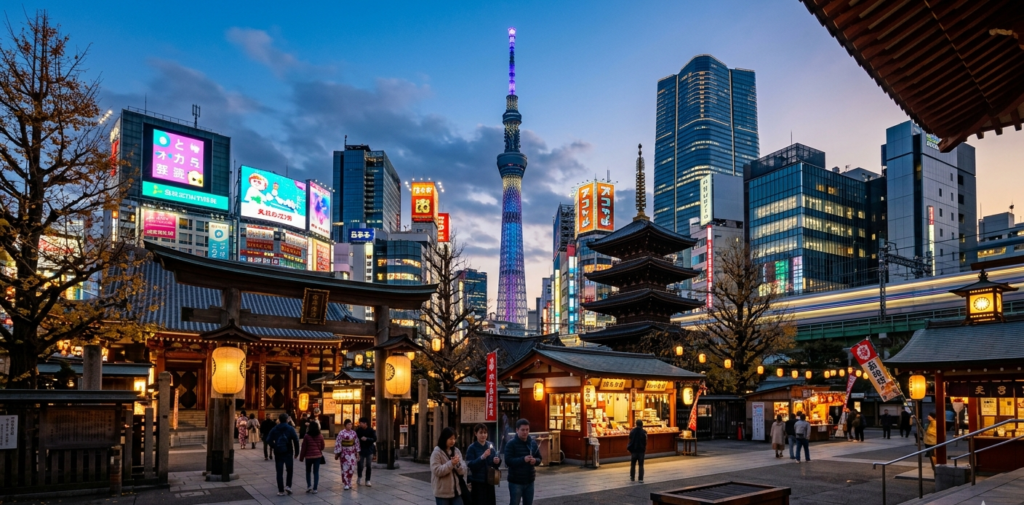
Tokyo is a city that lives in two dimensions at once. On one hand, you see skyscrapers that look like they’ve emerged from a science-fiction film. On the other, just a few steps away, you can find a quiet, ancient wooden shrine nestled under the shade of cherry blossom trees. This harmony between futuristic technology and ancient tradition is what makes Tokyo one of the most aesthetically captivating cities in the world.
Neon Lights and Futuristic Architecture
Your visual adventure in Tokyo isn’t complete without visiting Shibuya and Shinjuku. The Shibuya Crossing, the world’s busiest intersection, is a symbol of Tokyo’s incredible energy. At night, giant LED screens and colorful neon lights reflect off the asphalt, creating an iconic “cyberpunk” atmosphere.
Architectural marvels can also be found at Azabudai Hills or the Tokyo Skytree, where building design isn’t just about height, but about how technology can create living spaces that are both efficient and artistic. Here, Tokyo shows its face as a world leader in urban innovation.
Stillness Behind the Torii Gates
However, Tokyo isn’t just about noise and lights. In the middle of this concrete jungle, there are “pockets” of tranquility. One of the most famous is the Meiji Jingu Shrine. As soon as you pass through the giant wooden torii gate, the roar of traffic seems to vanish, replaced by the rustle of leaves in a vast urban forest.
Here, Shinto traditions are still practiced with great solemnity. You will see locals paying their respects in silence—a scene that stands in stark contrast to, yet coexists naturally with, the fast-paced modern lifestyle. A similar feeling can be found at Senso-ji, Tokyo’s oldest temple in Asakusa, where clouds of incense smoke transport you back hundreds of years.
Aesthetics in the Small Details
The beauty of Tokyo also lies in organized small details. From the bullet trains (Shinkansen) that are always on time to the food packaging in depachika (basement food halls) that looks like a work of art. Every corner of this city is designed with precision and a high sense of artistry.
Even small alleys like Omoide Yokocho (Memory Lane) offer a different aesthetic—warm red paper lanterns and tiny, narrow stalls provide a nostalgic, highly photogenic glimpse into post-war Japan.
Tokyo is proof that technological progress doesn’t have to bury the heritage of the past. The city succeeds in preserving its cultural identity while racing toward the future. For a traveler, Tokyo offers a broad spectrum of experiences: from the excitement of the urban hustle to spiritual peace inside a shrine. Tokyo is more than just a destination; it is a lesson in maintaining balance amidst a changing world.