- Location: Teluk Bakau Coastal Kelongs, Eastern Pulau Bintan
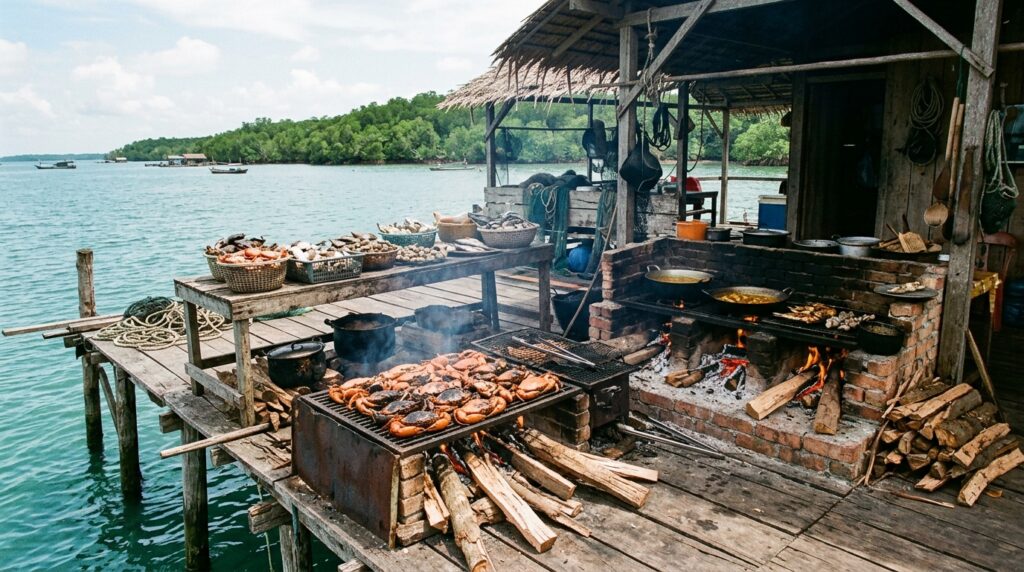
Along the shallow, seagrass-rich coastal shelf of eastern Bintan, the ocean landscape is dotted with Kelongs—traditional, wide-set wooden platforms built on thick stilts out in the open sea. Historically used by local fishermen to trap schools of anchovies at night, these offshore structures also house a raw, unpretentious maritime culinary subculture. These five open-air dining journeys take you off the mainland via wooden longtail boats to spend your evening on a floating timber hearth, where you will watch fresh catches roasted over open wood fires and savor traditional, spice-laden seafood feasts surrounded by a 360-degree view of the dark ocean horizon.
1. The Longtail Platform Approach
The culinary journey begins at a rustic timber pier on the Teluk Bakau shore just before the sun dips below the horizon. You will board a traditional wooden longtail boat (pompong), its engine humming rhythmically as it navigates the shallow coral channels heading two kilometers out to sea. Your destination is a massive, independent kelong constructed entirely from weathered nibung palm trunks and tied together with thick nylon rigging. Stepping onto the wide, open-air wooden deck as the ocean breeze carries the rich scent of burning hardwood instantly detaches you from the modern mainland.
2. The Live-Well Line Catch
Before the cooking begins, this tactile session invites you to interact directly with the evening’s harvest. At the center of the wooden platform, large square openings in the floorboards reveal submerged, heavy-mesh nets known as live-wells, where the day’s hand-line catches are kept completely fresh in the moving ocean tide. Under the guidance of a kelong fisherman, you will pull up a line to select your dinner—ranging from large, silver groupers and red snappers to live mud crabs. Handing the fresh, saltwater-slick catch directly to the kitchen deck offers an authentic connection to the sustainable rhythms of the Riau archipelago.
3. The Coconut-Husk Crab Roast
The focal point of the kitchen deck is the communal hearth: a large, sand-filled iron tray where an open fire is fueled by a dense mixture of dried coconut husks and local mangrove driftwood. You will watch the cook split the fresh mud crabs with a heavy cleaver, toss them in a simple marinade of crushed sea salt, key lime juice, and wild bird’s eye chilies, and lay them directly onto a hot wire grate over the glowing embers. The intense, sweet heat of the burning coconut shells caramelizes the crab’s natural juices inside the shell, infusing the sweet meat with a deep, unmistakable wood-smoke aroma.
4. The Gonggong Sea-Snail Simmer
This highly localized culinary segment introduces you to Bintan’s most iconic seafood delicacy: Gonggong (canarium sea snails), hand-harvested from the deep seagrass beds surrounding the kelong stilts. The snails are slow-simmered in a deep clay pot over a low charcoal flame, infused only with crushed lemongrass stalks, bruised ginger, and local sea salt. Sitting on a low wooden bench, you will learn the traditional method of using a small wooden toothpick to gently slide the tender, sweet meat out of its spiral shell, dipping it into a thick, sweet-and-sour chili paste that completely brightens the palate.
5. The Stilt-Line Plinth Decompression
The final dining experience takes place during the late-night hours on the outermost edge of the kelong plinth, where the floorboards jut directly over the open, dark expanse of the sea. The open fires are reduced to soft, glowing orange embers, and the only light comes from a few low-hanging lanterns. As you enjoy a hot, steaming mug of Wedang Jahe—a spicy ginger tea sweetened with raw palm sugar—you can listen to the rhythmic, gentle slap of the dark waves against the wooden pilings beneath your feet. Watching the distant, twinkling lights of passing cargo ships creates a powerful sense of isolation and a peaceful close to your offshore feast.