
- Location: Kota Tua, Manggarai, and Tanjung Priok, Jakarta
Beneath the towering glass skyscrapers and modern elevated concrete transit lines of Jakarta lies a gritty, subterranean world of vintage iron and forgotten colonial transit routes. The old railway infrastructure of the capital represents some of the most complex engineering feats of the late 19th and early 20th centuries, much of it now sitting frozen in time. These five urban exploration treks guide you through hidden maintenance tunnels, abandoned locomotive depots, and grand historic stations, providing an intense look at the raw, industrial bones of Batavia through the lens of architectural photography.
1. The Subterranean Vaults of Old Batavia
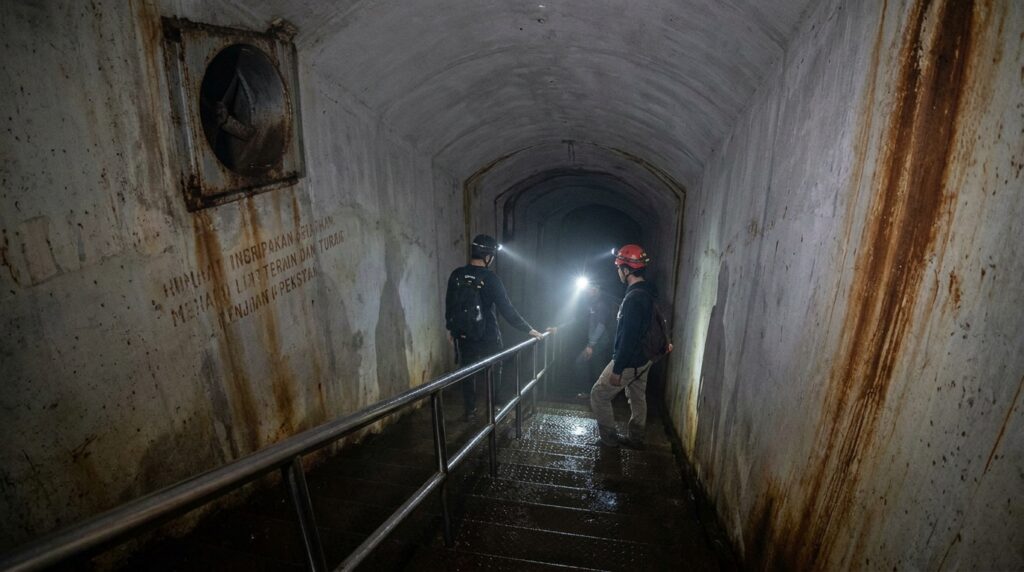
This technical photography trek begins in the deep, water-stained foundations below the historic Jakarta Kota Station (Beos) in the Old Town sector. Escorted by a heritage guide, you slip through an unmarked metal maintenance hatch and descend into the network of brick-lined drainage vaults and old utility tunnels built by Dutch engineers in the 1920s. The environment is dark and damp, with water slowly dripping from the vaulted ceilings, creating perfect reflections for long-exposure photography. Capturing the dramatic contrast between the sharp industrial steel beams above and the soft, weathered red bricks below offers a unique glimpse into the unseen foundation that supports the city’s oldest transport hub.
2. The Ghost Depots of Manggarai
Tucked away behind the high concrete walls of the active Manggarai rail yard lies an isolated graveyard of retired passenger carriages and ancient steam engines. This late-afternoon exploration focuses on capturing the textures of decaying iron, peeling paint, and wild banyan roots that have slowly breached the roofs of the old rusted cars. Walking between rows of stacked, vintage mid-century carriages, your camera lens catches the golden hour light cutting through shattered glass windows and illuminating empty interiors. It is an evocative, silent landscape of industrial nostalgia, standing in stark contrast to the high-speed commuter trains rushing past just a few meters away on the active main tracks.
3. The Art Deco Vaults of Tanjung Priok
Heading north to the coastal port district, this trek targets the grand, monumental spaces of the Tanjung Priok Railway Station, an Art Deco masterpiece opened in 1914. This architectural photography trail focuses on the immense scale of the main barrel-vaulted roof and the sweeping geometric windows that filter natural light into the vast, empty terminal halls. You will position your tripod along the abandoned upper galleries, capturing the dramatic patterns of light and shadow cast across the platform floorboards. The sheer scale of the concrete arches and the industrial symmetry of the overhead ironwork provide a masterclass in classical European transit design adapted for the tropical coast.
4. The Steel Viaduct Walkway
This high-angle trek explores the architectural framework of the old elevated iron viaducts that snake through the dense neighborhoods of Sawah Besar and Jayakarta. Walking along the narrow, secured maintenance walkways running parallel to the tracks, you are positioned right at the eye level of Jakarta’s bustling urban chaos. The photographic focus here is capturing the geometric lines of the heavy iron rivets and lattice girders framing the chaotic, colorful life of the streets below. The physical vibration of the steel structure as a modern train roars past adds a thrilling, high-energy dimension to this industrial skyline shoot.
5. The Forgotten Junction Terminus
The final exploration guides you to a small, completely abandoned suburban branch-line terminus hidden inside a dense industrial zone near the western edge of the city. The tracks here have been completely reclaimed by thick tropical grass, and the old wooden signal tower sits tilted at a sharp angle under the canopy of a massive rain tree. This session challenges you to capture nature’s slow victory over industrial engineering, using macro photography to focus on rusted switching gears choked by creeping vines and old iron tracks disappearing into the mud. It is a quiet, poetic conclusion to your journey through Jakarta’s rail history, showing the elegant beauty of forgotten infrastructure returning to the earth.