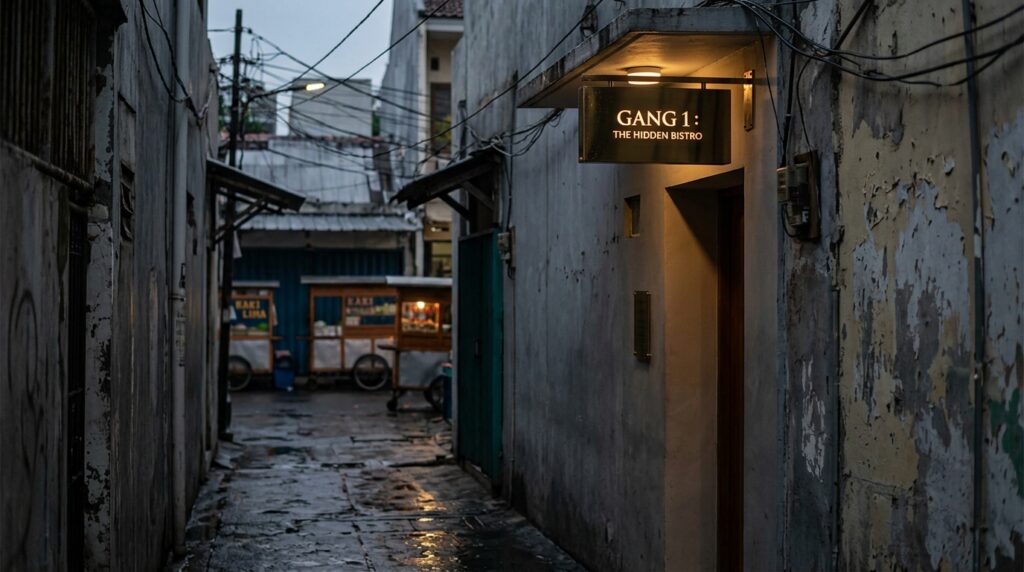
The true essence of Jakarta’s elite culinary scene is rarely found behind the flashy glass of a shopping mall or the sterile lobby of a corporate skyscraper. Instead, it thrives within the quiet, tree-lined residential corridors of Menteng and Gondangdia, where grand colonial-era villas and unassuming garden gates hide some of the most sophisticated kitchens in Southeast Asia. This is “Back-Alley Gastronomy”—a world of private dining, high-security gates, and unmarked entrances that open into opulent dining rooms of extraordinary character. For the traveler who seeks an intimate, world-class meal away from the public eye, these hidden residential spots offer a sense of exclusivity and architectural charm that no commercial district can replicate.
Plataran Menteng
located on Jalan H.O.S. Cokroaminoto No. 42, is a majestic three-story colonial mansion that has been meticulously transformed into a sanctuary of Indonesian high-dining. While the street outside serves as a busy artery of Central Jakarta, once you cross the threshold, the roar of the city is instantly replaced by the soft hum of traditional Javanese music and the rustle of indoor trees. The restaurant is a literal labyrinth of private dining rooms, each adorned with museum-quality antiques, intricate wood carvings, and soaring ceilings. The menu is a royal tribute to the archipelago’s flavors, elevating humble street ingredients with master-level fine-dining techniques. Dining here feels like being an invited guest in the home of a 19th-century aristocrat, offering a level of privacy and historical grandeur that makes the modern world outside feel like a distant memory.
Bunga Rampai
situated in a beautifully preserved heritage house on Jalan Teuku Cik Ditiro No. 35, offers a similar trip back in time but with a focus on the “Indisch” elegance of the early 20th century. The building is an architectural marvel of white-washed walls and grand windows, tucked away in the heart of the Menteng residential district where the sidewalks are still shaded by century-old mahogany trees. The interior is divided into several themed rooms, including a breathtaking glass-roofed conservatory on the top floor that allows you to dine under the stars while surrounded by lush, manicured greenery. The culinary experience is a refined exploration of legendary Indonesian recipes, served with a colonial-era formality that is both rigid and incredibly charming. It remains a legendary spot for those who want to experience the “Old Batavia” high life in a setting that remains strictly residential and remarkably tranquil.
Pierre
located on Jalan Senopati No. 39 (positioned on the quiet residential fringe of the Menteng-Senopati axis), is a sophisticated French bistro that intentionally avoids the spotlight of the main commercial strips. Hidden behind a modest, dark, and almost anonymous facade on a street better known for its private homes, Pierre offers an atmosphere that is both moody and incredibly chic. The dining room is designed to feel like a high-end Parisian apartment, featuring warm amber lighting, vintage French posters, and plush leather booths that encourage long, private dinners. The kitchen focuses on “Haute-Cuisine” classics—think escargot, foie gras, and meticulously prepared steaks—executed with a precision that rivals the best restaurants in Europe. It is the definitive “hidden” spot for a romantic evening or a high-stakes business dinner where discretion and world-class culinary execution are the primary requirements.
Tugu Kunstkring Paleis
found on Jalan Teuku Umar No. 1, is a landmark of Gondangdia that operates more like a private art gallery than a public restaurant. Originally the Fine Arts Circle of the Dutch East Indies, this palatial building is hidden behind a row of massive tropical trees and a grand, sweeping driveway. The “Palais” is famous for its soaring ceilings, massive paintings that span entire walls, and a private dining room dedicated to the “Rijsttafel” ceremony—a legendary Dutch-Indonesian feast that originated in the houses of the colonial elite. Dining here is a theatrical and immersive experience; the staff wears period-appropriate costumes, and the atmosphere is heavy with the weight of centuries of history. It remains a favorite for international dignitaries and travelers who seek a private, museum-like environment for a meal that is as much an educational journey as it is a culinary one.
Kaum Jakarta
situated on Jalan Dr. Kusuma Atmaja No. 77, is a “hidden” culinary laboratory tucked inside a refurbished colonial house in a quiet Menteng side street. The entrance is subtle, marked only by a small sign and a minimalist gate, leading into a space that seamlessly blends mid-century modern design with traditional tribal motifs. Kaum (meaning “tribe” in Indonesian) is dedicated to rediscovering lost indigenous cooking techniques and rare ingredients from across the thousands of islands in the archipelago. The result is an elevated, high-fidelity dining experience that is both intellectually stimulating and incredibly private. It is a must-visit for the culinary explorer who wants to see the “New Indonesia” within the architectural shell of the “Old Indonesia,” providing a sophisticated retreat away from the noise of the city’s commercial centers.