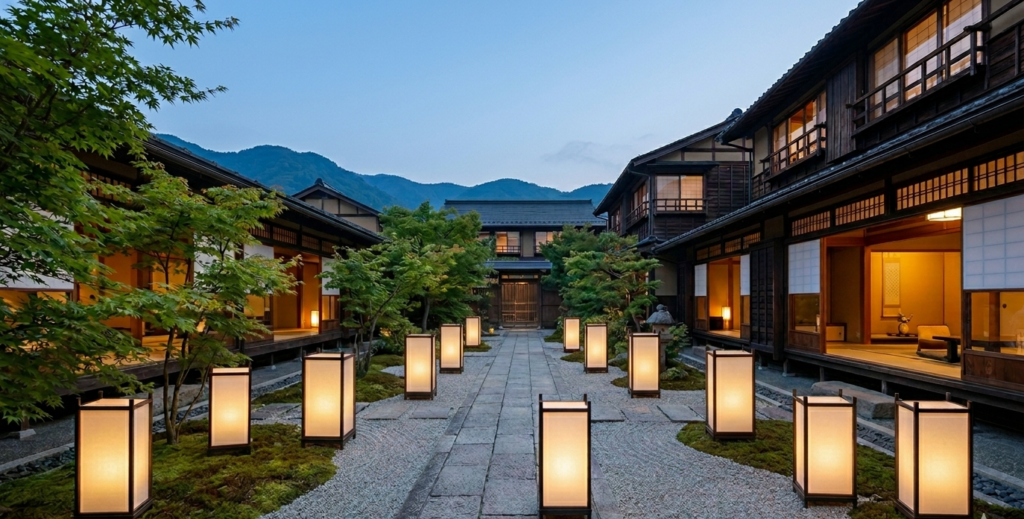
In the narrow, stone-paved alleys of Kanazawa, luxury is measured in the curve of a wooden beam and the precise placement of a single garden stone. Unlike the neon-lit rush of Tokyo, Kanazawa breathes through its history of “Kogei” (high-end craftsmanship). Here, the Ryokan is a temple of mindfulness—a space where the architecture of cedar and paper is designed to quiet the mind. These ten sanctuaries offer a journey through the “Lantern Path,” where the soft glow of Washi paper guides you into a world of deep, spiritual calm.
1. Kayotei: The Masterpiece of Natural Integration
Located just outside the city in the forest of Yamanaka Onsen, Kayotei is a masterclass in Sukiya-style architecture. With only ten rooms, the luxury here is the “Framed View.” Every window is positioned like a camera lens, capturing the ancient forest as if it were a living painting. The use of rare Hinoki (cypress) wood creates a scent that immediately lowers the heart rate.
2. Asadaya Ryokan: The Culinary Sanctuary
Founded in 1867, Asadaya is widely considered one of the most exclusive inns in Japan. The architecture is a rigorous example of Traditional Joinery—built entirely without nails. The focus here is on the “Tea Ceremony” aesthetic, where every movement and every architectural detail serves the purpose of Omotenashi (selfless hospitality).
3. Umedera: The Zen Temple Stay
For true spiritual depth, this Ryokan operates within a Buddhist temple framework. The design is Austere and Powerful. The rooms feature minimalist tatami layouts, facing a 400-year-old Zen garden. The luxury here is “The Sound of Silence,” providing a space for meditation and “Zazen” practice amidst centuries-old timber.
4. Sumiyoshiya: The Legacy of the Samurai
Located near the Omicho Market, this Ryokan has been run by the same family for 300 years. The design features a stunning Inner Courtyard Garden (Tsuboniwa) that acts as the building’s lungs. The architecture uses dark, polished “Urushi” lacquer finishes, reflecting the samurai-era preference for strength and understated elegance.
5. Kinnotake Tonosawa: The Modern Bamboo Grove
While modern in its amenities, this Ryokan uses Bamboo as a Structural Theme. The design is defined by vertical lines and open-air baths that overlook a private forest. For a designer, the way this inn uses “Light and Shadow” through bamboo lattices is a perfect lesson in architectural rhythm.
6. Yamanoo: The Hilltop Viewpoint
Perched on a hill overlooking the city, Yamanoo is famous for its history as a high-end “Ryotei” (restaurant). The architecture features Expansive Verandas (Engawa) that wrap around the building, blurring the line between the interior tatami and the manicured moss gardens outside.
7. Matsusaki: The Imperial Garden Estate
Matsusaki is set within a vast private park. The architecture is grander than the city-center inns, featuring long, sweeping corridors and large guest suites. The focus here is on Water Harmony—the buildings are interconnected by wooden bridges over koi ponds, creating a sense of constant movement and life.
8. Ryokan Kurashiki: The Merchant’s Elegance
Technically a “Kura” (storehouse) conversion, this inn showcases the Industrial Heritage of old Japan. The design utilizes massive exposed beams and white-washed plaster walls. It is a stunning example of how old storage structures can be engineered into high-end, cozy sanctuaries.
9. Hana-Akari: The Light of the Flower
This boutique Ryokan focuses on the Art of the Lantern. At night, the gardens and corridors are lit by hand-crafted paper lanterns, creating an ethereal, glowing atmosphere. The woodwork is delicate, featuring intricate “Kumiko” patterns that cast geometric shadows across the paper doors.
10. Satoyama Chiso: The Reclaimed Heritage
This Ryokan is a collection of relocated Gassho-zukuri (steep-roofed) farmhouses from the mountains. It is a feat of “Architectural Salvage,” where massive, centuries-old logs have been reassembled to create a luxury lodge. It represents the “New Zen”—sustainable, historic, and deeply rooted in the earth.