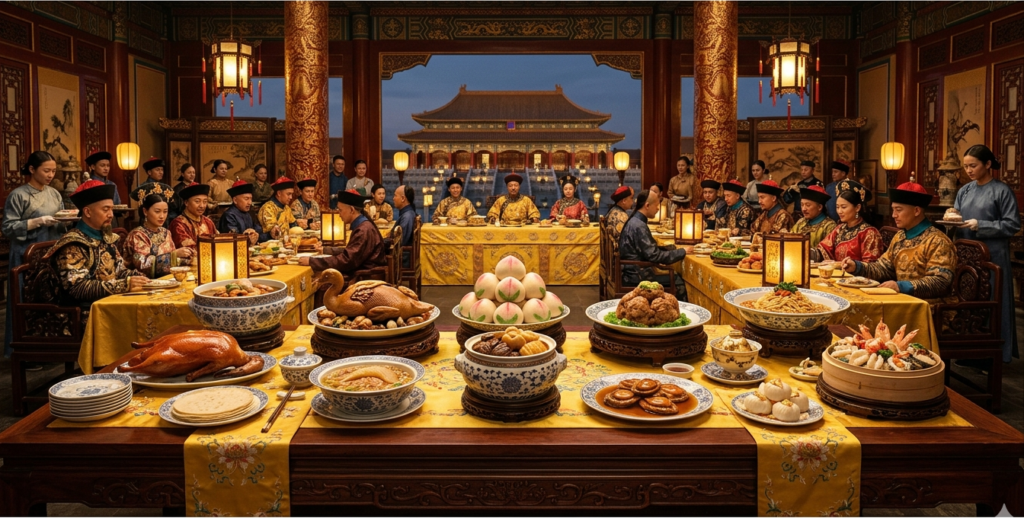
Inside the crimson walls of the Forbidden City, dining was a choreographed ritual of absolute power. The Imperial Kitchens employed thousands of chefs, each dedicated to a single ingredient or technique, ensuring that every bite served to the Son of Heaven was a masterpiece of balance and symbolism. These ten dishes represent the pinnacle of dynastic luxury—where culinary skill meets the weight of history.
1. Peking Roasted Duck: The Golden Standard
Originally a staple of the Yuan Dynasty, this dish became a royal obsession during the Ming and Qing eras. The ducks are air-pumped to separate the skin from the fat, then roasted in open brick ovens until the skin becomes a translucent, mahogany glass. Served in thin pancakes with hoisin and scallions, it represents the precision and patience of the northern courts.
2. Buddha Jumps Over the Wall: The Alchemist’s Stew
A legendary dish from the Qing Dynasty, this is perhaps the most complex soup in the world. Containing over 30 premium ingredients—including abalone, sea cucumber, and dried scallops—it is double-boiled for days. The aroma is said to be so heavenly that even a monk would “jump over a wall” to taste it. It is the ultimate symbol of abundance.
3. Manchu-Han Imperial Feast: The 108 Course Symphony
Not just a dish, but a monumental banquet created to symbolize the unity between the Manchu and Han Chinese people. This three-day event featured 108 unique dishes, ranging from exotic meats to rare fungi. It remains the most legendary culinary event in Chinese history, representing the political harmony of the empire.
4. Braised Abalone: The Gem of the Sea
In the imperial court, abalone was more than food; it was a status symbol equivalent to gold. Slow-braised in a rich, dark gravy made from ham and old hen, the texture becomes “heart-candy”—tender yet resilient. It was served to signify the Emperor’s reach over the vast eastern oceans.
5. Bird’s Nest Soup: The Elixir of Longevity
Harvested from the high cliffs of Southeast Asia, these nests were brought as tribute to the Forbidden City. Prepared as a clear, delicate soup, it was prized for its supposed medicinal properties and its ability to maintain youthful skin. It represents the purity and health of the royal bloodline.
6. Yellow Croaker with Pine Nuts: The Sweet-Sour Harmony
Yellow was the exclusive color of the Emperor, and this golden-fried fish was a favorite for its auspicious hue. The fish is intricately carved to resemble a pinecone, fried to a crisp, and glazed in a bright sweet-and-sour sauce. It represents prosperity and a “surplus” of wealth for the new year.
7. Empress Cixi’s Steamed Buns: The Jewel of the Palace
The Dowager Empress Cixi was notoriously picky about her food. These bite-sized steamed buns (mantou) were made with the finest flour and shaped into delicate flowers or animals. They were often filled with minced venison or rare mushrooms, showcasing the finesse and femininity of the inner court.
8. Deer Sinew with Truffles: The Strength of the Steppe
Reflecting the Manchu heritage of the Qing emperors, wild game like deer was highly prized. The sinew was braised until it reached a gelatinous consistency, often paired with mountain truffles. It was believed to give the Emperor the physical strength and endurance of the nomadic warriors of the north.
9. Chrysanthemum Fish: The Art of the Knife
This dish showcases the incredible knife skills of the palace chefs. A fillet of fish is sliced into hundreds of thin strands that remain attached to the skin; when fried, it blooms like a chrysanthemum flower. Because the chrysanthemum represents longevity and autumn, it was a staple at royal birthday celebrations.
10. Dragon’s Beard Candy: The Ephemeral Sweet
A delicate confection made from thousands of hair-thin strands of pulled sugar, wrapped around crushed peanuts and coconut. It was named for the mythical dragon, the symbol of the Emperor himself. The candy is so fragile it must be eaten immediately, representing the fleeting and ethereal nature of true beauty.