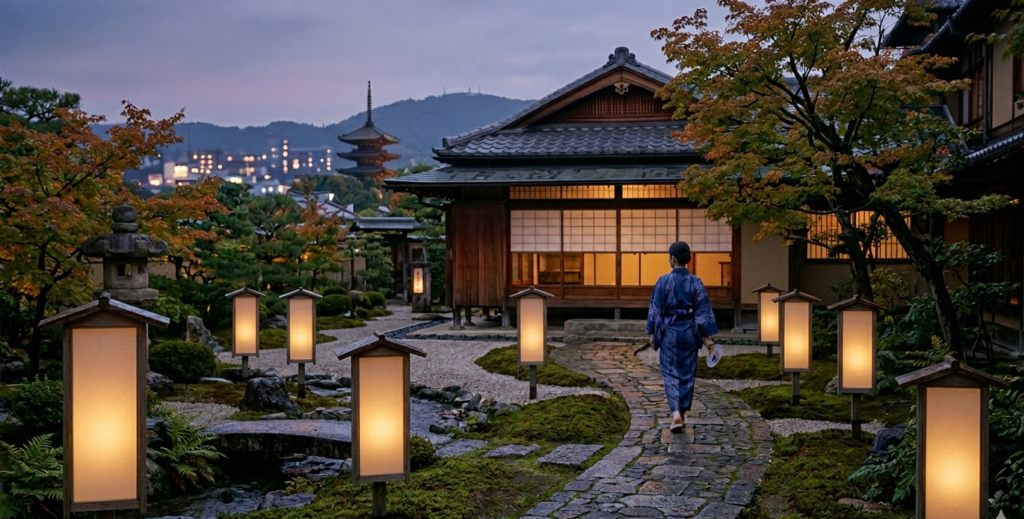
In the heart of Kyoto, the rush of the modern world fades into the sound of water dripping into a stone basin. To stay in a traditional Ryokan is to participate in a centuries-old choreography of hospitality known as Omotenashi. Here, luxury is not measured by gold or glitter, but by the texture of hand-woven straw, the seasonal change of a single flower in an alcove, and the profound silence of a private garden. These ten sanctuaries are where the soul of ancient Japan remains untouched.
1. Tawaraya Ryokan: The Sovereign of Stillness
Considered by many as the finest Ryokan in the world, Tawaraya has been run by the same family for eleven generations. There is no signage, only a discreet entrance that leads into a labyrinth of wooden corridors. Each room has a unique view of a miniature garden, designed to look different with every season. It is a masterclass in invisible luxury.
2. Hiiragiya: The House of Holly Leaves
Founded in 1818, Hiiragiya has hosted samurai, imperial family members, and literary giants. The aesthetic is “Classic Kyoto”—polished dark wood, intricate sliding doors (fusuma), and a sense of timelessness. The service here is legendary, operating with a precision that feels as natural as the falling rain.
3. Gion Hatanaka: The Heart of the Geisha District
Located right at the edge of the Yasaka Shrine, this Ryokan offers a gateway into the mysterious world of Gion. It is famous for its “Kyoto Cuisine” and its evening gatherings with Maiko (apprentice Geisha). It provides a rare balance between the vibrant culture of the city and the quietude of a traditional home.
4. Hoshinoya Kyoto: The Riverside Retreat
To reach Hoshinoya, you must board a private wooden boat and travel up the Hozugawa River toward Arashiyama. This is a “Modern Ryokan” that reimagines tradition through a contemporary lens. The architecture uses traditional woodblock printing patterns and “longing” views of the river, creating a sense of secluded majesty.
5. Kanamean Nishitomiya: The Artisan’s Sanctuary
A small, intimate Ryokan with only seven rooms, Kanamean is deeply rooted in the world of Japanese crafts and Noh theater. The owner is a connoisseur of wine and traditional Kaiseki dining, making this the perfect destination for those who seek a sophisticated bridge between East and West.
6. Ryokan Kurane: The Hidden Mountain Gem
Nestled in the northern mountains of Kyoto in the village of Kurama, this Ryokan is famous for its outdoor sulfur baths (onsen). Surrounded by towering cedar trees and the crisp mountain air, it offers a “primitive” luxury where the main attraction is the raw power of nature and the warmth of the hot springs.
7. Shiraume: The White Plum of Gion
Located on a quiet canal lined with weeping willows and plum trees, Shiraume is a former Geisha house turned Ryokan. The name means “White Plum,” and the hospitality here feels like being welcomed into a private family estate. The wooden bridge leading to the entrance is one of the most photographed spots in the city.
8. Seikoro Ryokan: The Artistic Nostalgia
Founded in 1831, Seikoro features a unique mix of traditional Japanese architecture with subtle Western influences from the Taisho era. The Ryokan is filled with antiques, silk screens, and polished wooden baths that have turned dark with age. It is a place that breathes nostalgia and romance.
9. Yoshikawa Inn: The Tempura Temple
While all Ryokans serve incredible food, Yoshikawa is world-renowned for its specialized Tempura Kaiseki. The building is a classic “Machiya” style townhouse with a stunning interior garden. Dining here while looking out at the moss-covered lanterns is a sensory experience that defines the Kyoto lifestyle.
10. Nazuna Kyoto Gosho: The Reimagined Machiya
This Ryokan is a beautifully restored “Kyo-machiya” (traditional townhouse) located near the Imperial Palace. It focuses on the theme of “Wagashi” (Japanese sweets), where each room is inspired by a different traditional confection. It represents the New Zen—cleaner lines, more light, but with the same ancient soul.