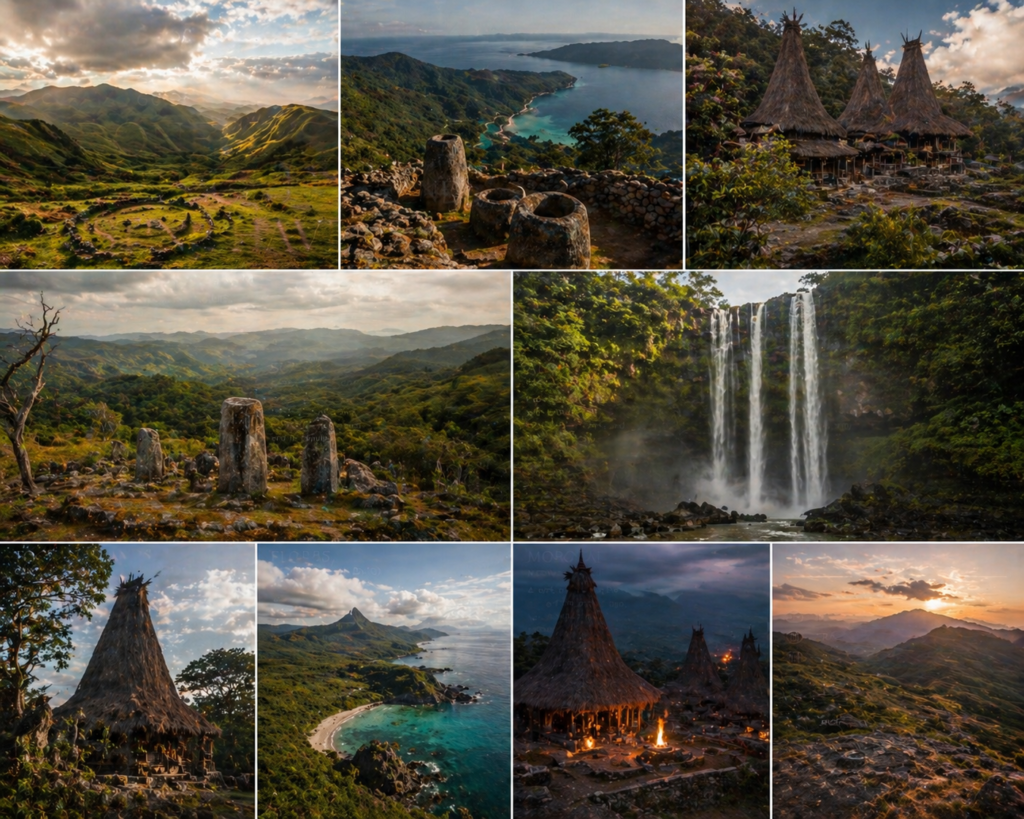
In the high, mist-shrouded altitudes of East Nusa Tenggara, time flows differently. Here, the modern world feels like a distant whisper, drowned out by the stoic presence of ancient traditions. To travel through the highlands of Flores and Sumba is to walk among living ancestors, where the architecture is sacred and every stone has a name. This is a curated list of ten destinations that define the spiritual and cultural soul of the Indonesian frontier.
1. Wae Rebo, Flores: The Village Above the Clouds
Tucked away in a remote valley surrounded by dense jungle, Wae Rebo is home to the iconic Mbaru Niang—seven cone-shaped houses that represent the unity of the community. To reach it is a pilgrimage; a three-hour hike through the rain-drenched forest that rewards the spirit with a sight of architectural perfection and a sky full of stars.
2. Ratenggaro, Sumba: The Guardians of the Sea Cliffs
Ratenggaro is a breathtaking paradox. Its thatched-roof houses reach record-breaking heights of up to 20 meters, standing tall against the fierce winds of the Indian Ocean. Located right on the edge of a dramatic sea cliff, the village is guarded by ancient megalithic tombs that have overlooked the turquoise waters for centuries.
3. Bena Traditional Village, Flores: The Stone Path of the Ancestors
Sitting at the foot of Mount Inerie, Bena is a megalithic monument in itself. The village is laid out in two parallel rows of high-roofed houses, with stone altars (Nga’du and Bhaga) in the center representing the male and female spirits. The air here is thin, cold, and heavy with the scent of tradition.
4. Prai Ijing, Sumba: The Terraced Kingdom of West Sumba
Prai Ijing offers a stunning visual scale, with its traditional houses cascading down a hill like a staircase to the gods. Surrounded by lush teak forests, the village provides a panoramic view of the Sumba savanna, where the high roofs of the houses seem to compete with the height of the trees.
5. Mount Kelimutu, Flores: The Three-Colored Spirit Lakes
While not a village, Kelimutu is the most sacred natural site in Flores. The locals believe that the three volcanic lakes—which change color unpredictably from turquoise to red and black—are the final resting places for souls. Standing on the crater rim at dawn feels like witnessing the very edge of the spirit world.
6. Kampung Tarung, Sumba: The Spiritual Heart of Waikabubak
Located in the center of a bustling town yet completely isolated by its sanctity, Kampung Tarung is the center of the Marapu religion. It is a place of rituals and ancient laws, where the simple alignment of the houses and the placement of the sacrificial stones tell a story of cosmic balance.
7. Gurusina, Flores: The Resilient Spirit of the Ngada People
Gurusina is a testament to the community’s strength. Known for its wide central plaza and intricate wood carvings, each house (Sao) is decorated with buffalo horns that signify the wealth and social standing of the clan. It is a place where the connection between the living and the dead is tangible in every carving.
8. Pasunga, Sumba: The Valley of the Great Dolmens
In the Anakalang valley of Central Sumba, Pasunga holds some of the most impressive megalithic tombs on the island. The massive stone slabs, intricately carved with symbols of buffalo and crocodiles, represent the final “palaces” of the kings. It is a destination of profound silence and stone-cold majesty.
9. Todo, Flores: The Kingdom of the Web-Shaped Fields
Todo was once the center of the Manggaraian kingdom. Beyond its traditional circular houses, it is the gateway to the Lingko—spider-web-shaped rice fields. This unique agricultural geometry is a sacred division of land that ensures every member of the tribe is connected to the earth.
10. Waigalli, Sumba: The Hidden Fortress of the Highlands
Waigalli is one of Sumba’s oldest and most authentic villages. Perched on a steep hill for defense, it offers a raw, unfiltered look at highland life. The craftsmanship of the weaving here and the stoic nature of the inhabitants remind every visitor that the greatest luxury is the preservation of one’s identity.