
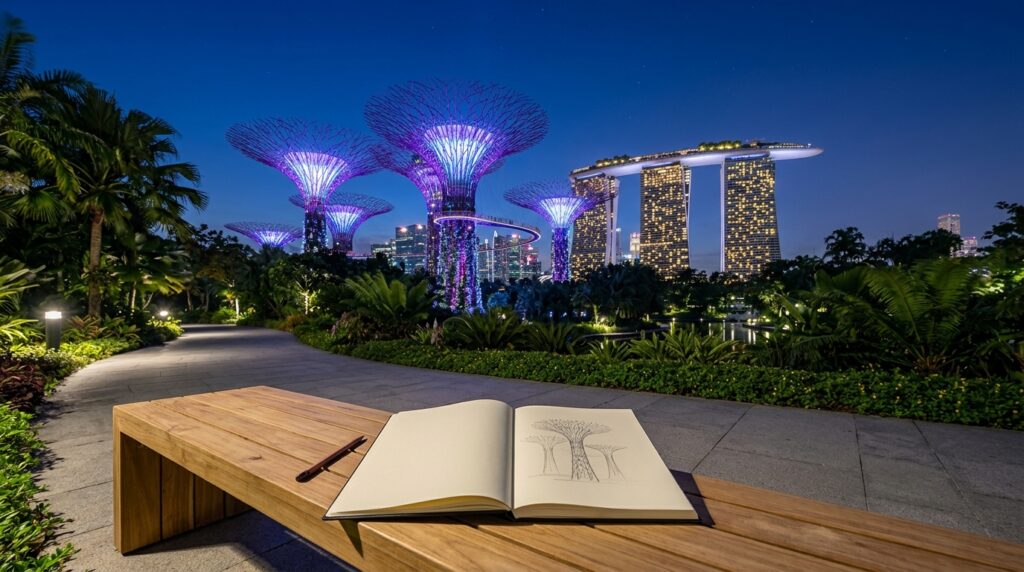
The Architecture of Modern Green Spaces
Stepping into the climate-controlled glass biomes at Marina Bay instantly alters your sensory environment. The heavy tropical humidity of Singapore disappears, replaced by a crisp, perpetual spring air designed to mimic high-altitude mountain regions. As you walk along the suspended aerial walkways, you are surrounded by massive engineering marvels—colossal steel supertrees and towering indoor waterfalls enveloped in hundreds of thousands of living plant species. This unique intersection of hyper-modern architectural design and raw, untamed nature creates a surreal landscape that forces you to disconnect from the frantic pace of the surrounding financial district. It is a space designed for visual exploration, where every angle offers a new perspective on how human design can integrate seamlessly with the natural world.
The Creative Visual Filter
Finding a quiet, shaded vantage point along the upper boardwalks allows you to transition from a casual tourist into an active observer. By pulling out a simple pocket sketchbook and a fine-liner pen, you change how you interact with your surroundings. The overwhelming scale of the city drops into the background as your focus narrows down to the immediate textures in front of you. You begin to notice the intricate geometry of the steel supports, the way shadows fall across the massive concrete pillars, and the delicate patterns of rare ferns and orchids climbing up the artificial bark. The goal here isn’t to create a flawless masterpiece or worry about perfect perspective; it is about using the physical act of sketching as a tool to anchor your attention. The motion of putting pen to paper forces your brain to process shapes, lines, and spaces slowly, effectively silencing the constant noise of daily stress and mental clutter.
5 Creative Steps to Sketch Vertical Plant Structures
To help you break down the overwhelming complexity of these massive vertical gardens into an easy, enjoyable drawing process, follow this straightforward creative guide:
- Frame the Core Skeleton: Start by lightly drawing the main structural lines of the building or supertree trunk using long, faint strokes to establish the overall scale on your page.
- Block Out the Main Leaf Masses: Instead of drawing individual leaves, sketch loose, soft circles or cloud-like shapes to mark where the thickest clusters of plants are growing.
- Capture the Sharp Contrasts: Find the areas where the dark, geometric shadows of the steel frames cut behind the bright green leaves, and shade them in heavily to give your drawing immediate depth.
- Layer the Organic Textures: Use quick, loose zig-zag lines and small repeating dots to mimic the rough, wild texture of ferns and hanging mosses draped over the clean architectural borders.
- Refine with Bold Outlines: Take a slightly thicker pen or press down harder to trace over the most important lines in the foreground, making the closest leaves pop out against the background details.