
- Location: Ampenan Historic Port Town, Mataram, Lombok
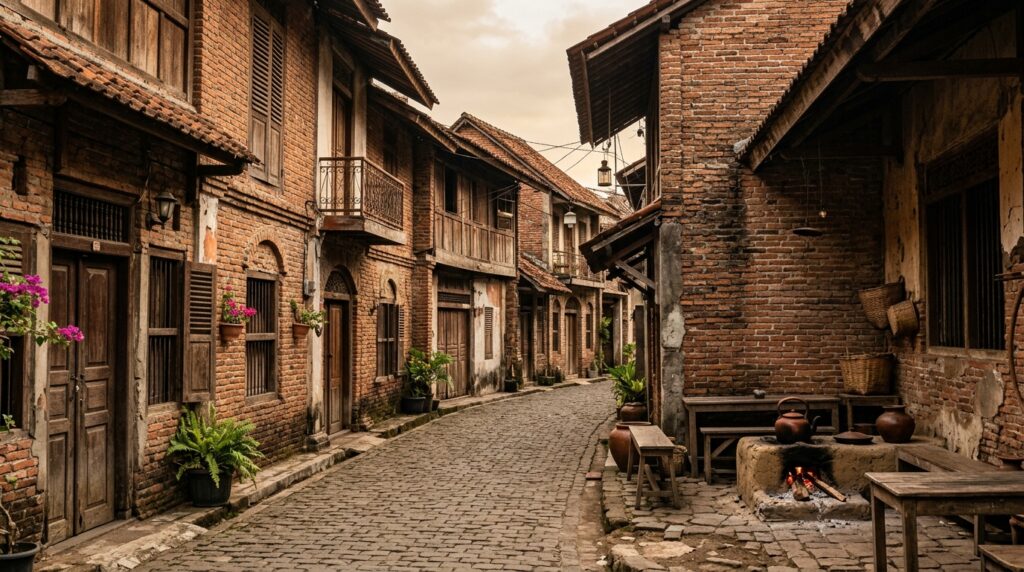
Where the modern, bustling capital city of Mataram meets the western shoreline of Lombok lies the atmospheric urban grid of Ampenan. Once the island’s primary colonial trade gateway, this historic seaside enclave is defined by a dense layout of centuries-old Dutch trading houses, thick-walled masonry warehouses, and traditional double-story Peranakan shophouses. These five heritage-focused urban explorations invite you to leave the standard beach routes behind and dive deep into Ampenan’s coastal-urban streets, mapping the grid of weathered brickwork before stepping inside a historic, low-lit coffee hearth to experience Lombok’s oldest urban coffee culture.
1. The Colonial Masonry Promenade
The urban heritage walk begins along the main commercial axis of Jalan Pabean, just as the late afternoon sun casts long, dramatic shadows through the historic grid. Walking along the wide pedestrian paths, you are flanked by towering, thick-walled trading houses featuring heavy arched doorways and classic louvred wooden shutters from the early 20th century. The sheer thickness of the vintage brickwork naturally insulates the street level from the tropical heat. Observing the structural decay and the layers of faded paint on these massive facades offers an immediate, tangible connection to the city’s maritime mercantile past.
2. The Peranakan Shophouse Alleyways
Moving off the main port road, the trail snakes into the tight, geometric residential alleys where traditional Peranakan architecture dominates. These dual-purpose structures feature narrow storefronts with living quarters above, characterized by intricate wooden lattice balconies and exposed red-brick support pillars. Walking through these quiet, stone-paved corridors after the daytime trade has quieted down allows you to focus entirely on the architectural details—such as the weathered terra-cotta roof tiles and the ornate ceramic entryways that have survived for generations.
3. The Vintage Charcoal Coffee Hearth
The sensory core of the Ampenan urban experience takes place inside a legendary, low-ceilinged coffee house that has operated within the same brick shophouse for decades. The interior is deliberately unadorned, featuring dark timber benches and raw concrete floors. You will take a seat right next to the open kitchen counter to watch the Barista manage a traditional, soot-stained clay kettle boiling over a low-heat charcoal hearth. The rich, earthy aroma of dark-roasted Lombok Robusta coffee beans filling the compact, high-ceilinged space anchors your senses completely in old-world urban nostalgia.
4. The Port-Ruins Structural Study
This segment guides you to the western terminus of the urban grid, where the old town abruptly meets the open sea. Here lie the massive, crumbling concrete and iron pillars of the abandoned Dutch pier, jutting out into the waves like a brutalist monument. Walking along the black-sand seawall adjacent to the ruins, you can trace the geometric lines of the old loading bays and custom houses. The contrast between the unyielding, weathered concrete structures and the shifting ocean tide provides an incredible visual playground for mapping urban decay and coastal resilience.
5. The Esplanade Twilight Decompression
The final heritage stage takes place on the wide, open-air pedestrian promenade of Ampenan Beach as twilight paints the sky in deep hues of amber and violet. Sitting on a low, minimalist concrete retaining wall overlooking the water, away from the buzz of central Mataram’s modern malls, you will be served a hot glass of Kopi Tubruk alongside a plate of traditional grilled banana smeared with local palm sugar. Watching the distant lights of cargo ships blink awake on the horizon while the sea breeze cools the historic brick facade of the old town brings a peaceful, grounding close to your city safari.