- Location: Berakit Coastal Waters, Northern Pulau Bintan
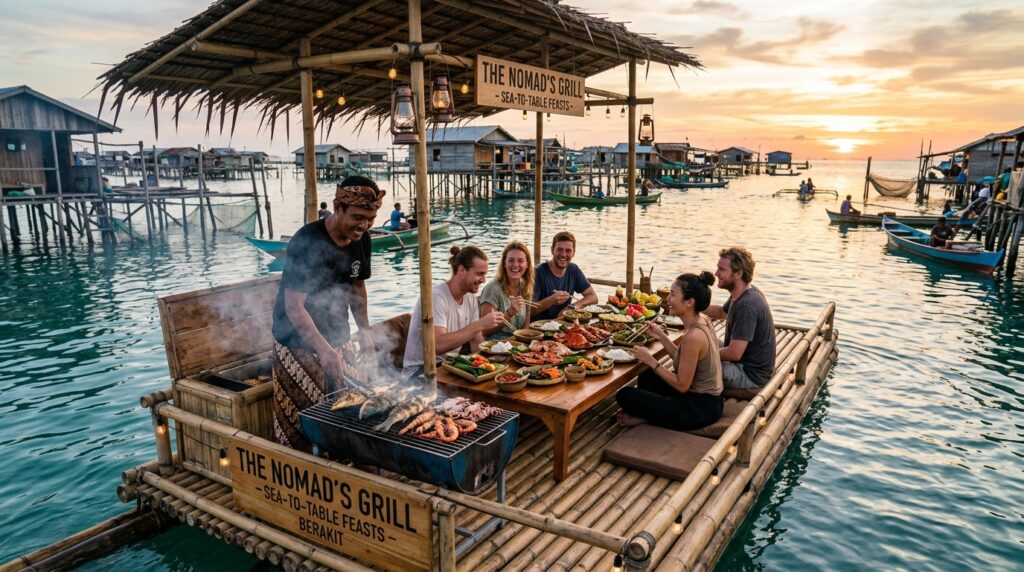
Far off the northern tip of Bintan, the modern roads fade into the open water where the sea-nomad descendants maintain their traditional fishing lifestyle. The horizon here is dotted with Kelongs—massive, floating wooden structures built on bamboo rafts and stabilized by long wooden stilts driven into the seabed. These five sea-to-table dining journeys take you out on motorized longboats to these isolated floating outposts, where you will dine under the stars, harvest your own dinner directly from the ocean currents, and experience the raw, fire-grilled culinary heritage of the South China Sea.
1. The Charcoal Kelong Boarding
Your culinary journey begins at dusk as you step off a wooden jetty in Berakit Village and board a local outrigger boat. Heading a kilometer out to sea, you arrive at a massive, floating bamboo platform illuminated by a single string of hanging generator lights. The air is instantly thick with the scent of burning coconut shells. The experience centers around an open-air fire pit built over a layer of protective sand in the middle of the wooden deck. Sitting on low benches right over the lapping waves, you will watch a local fisherman grill fresh, whole triggerfish and red snapper that were swimming in the ocean just minutes prior, seasoned only with sea salt and crushed local chilies.
2. The Night-Lift Net Harvest
This active dining experience immerses you directly into the traditional foraging methods of the Suku Laut. At midnight, the kelong operators switch on powerful underwater lights beneath the bamboo raft to attract schools of squid and small ocean fish. You will stand at the wooden winches, helping the crew manually haul up the massive, submerged lift nets from the dark depths. The reward for your physical effort is a thrashing catch of fresh, translucent calamari. The kitchen immediately takes the fresh squid, slicing it on a wooden board and tossing it directly into a hot iron wok with sweet soy sauce and cracked black pepper, delivering an unparalleled texture and freshness.
3. The Floating Oyster Shucking
This morning excursion focuses on the shallow coral shelves surrounding the Berakit kelongs, where rows of suspended bamboo baskets act as natural nurseries for local rock oysters. Stepping onto a smaller, specialized cultivation raft, you will use a heavy iron knife to pull up a basket and shuck the rough, mineral-crusted shells yourself under the guidance of an expert farmer. Eating the cold, plump oyster meat raw on the deck, dressed with nothing but a squeeze of fresh kalamansi lime juice, provides an intense explosion of pure, clean ocean flavor, surrounded by a 360-degree view of the turquoise northern sea.
4. The Mud-Crab Claypot Simmer
Tied to the dark mangrove roots where the Berakit river mouth meets the open ocean, this semi-sheltered floating kitchen specializes in deep-water crustacean cooking. The signature dish features heavy, blue-swimming mud crabs caught in woven bamboo traps along the estuary. The crabs are cracked open and slow-simmered inside heavy clay pots over an open charcoal brazier, submerged in a rich, thick broth made from pounded galangal, turmeric leaves, and fresh coconut milk squeezed on the raft. The slow cooking infuses the sweet, tender crab meat with the intense, aromatic spice heritage of the Riau Islands, creating a deeply satisfying, messy hands-on feast.
5. The Dawn Ocean-Broth Rest
The final culinary journey takes place during the peaceful transition of dawn, as the first light breaks over the open horizon of the South China Sea. Sitting on the edge of the bamboo platform with your legs hanging over the water, you will be served a steaming bowl of traditional Mee Siam seafood broth. The dish features thin rice noodles in a spicy, sour tamarind broth topped with fresh shrimp, wild herbs, and crispy fried shallots prepared by the kelong family. Sipping the hot, spicy soup while watching the sun rise out of the open ocean provides a calm, beautifully restorative conclusion to your journey through Bintan’s maritime food frontier.