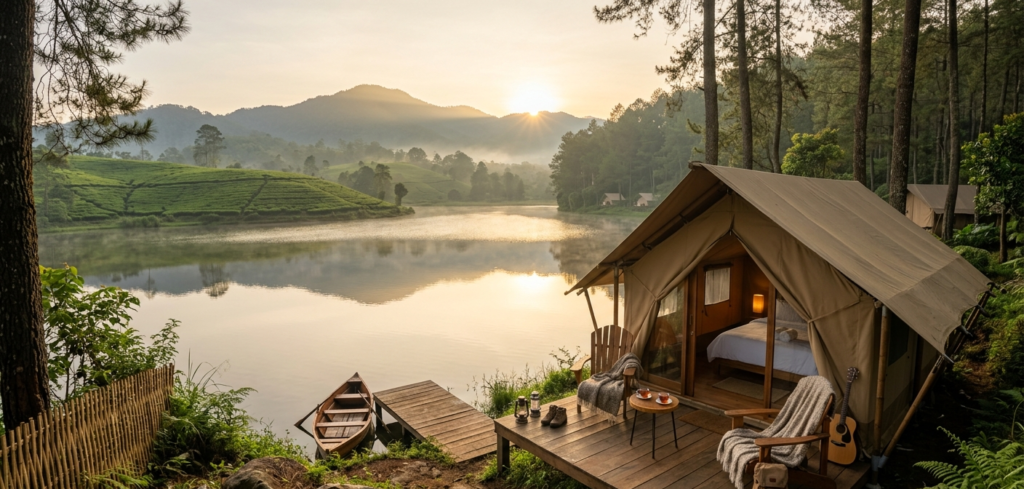
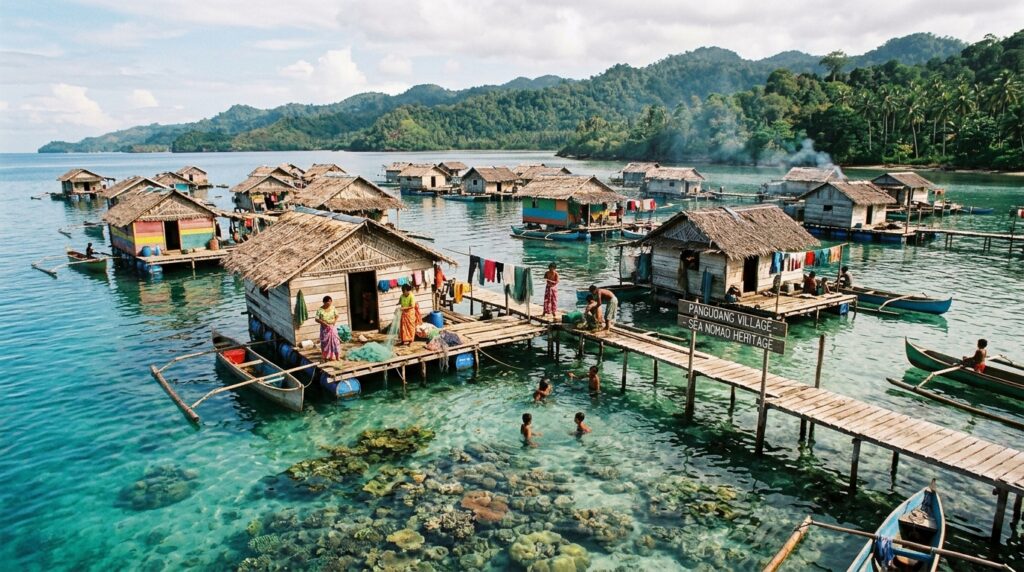
Away from the modern concrete resorts, the northeastern coast of Bintan preserves a deep connection to the ocean through traditional water architecture. Built on sturdy wooden pilings driven into the shallow coral flats, these floating cottages are inspired by the historic lifestyle of the Suku Laut (sea nomads). These five overwater stays offer an immersive look at traditional coastal engineering, where the turquoise sea flows directly beneath your slatted floorboards and the entire structure moves gently with the rhythm of the tide.
1. The Reef-Facing Stilt Suite
Constructed entirely from local, salt-resistant nibong wood and thatched with dried sago palm leaves, this traditional stilt suite sits three hundred meters away from the mainland shore of Pangudang Village. The interior layout values simplicity, featuring a wide bed positioned directly in front of open wooden shutters that look out across the empty expanse of the South China Sea. The unique feature of this stay is the slatted timber floorboards, which allow you to look straight down into the clear coastal water below to watch schools of small striped fish navigate the seagrass beds. It is an immersive, low-impact living experience where the boundary between your room and the ocean ecosystem is completely removed.
2. The Tidal Deck Lounge
Each overwater cottage features a broad, low-profile wooden deck that drops down via a set of hand-carved steps directly into the shallow reef flats of northeastern Pulau Bintan. At high tide, the water rises to cover the bottom steps, turning the deck into a private floating platform where you can sit with your feet submerged in the warm sea. At low tide, the water recedes to reveal a vast, fascinating landscape of living coral heads, colored sea stars, and hidden marine life that you can explore on foot right outside your room. This changing environment ensures that your immediate surroundings shift dramatically every six hours, connecting you to the natural cosmic rhythm of the moon.
3. The Traditional Fish-Trap Balcony
Built into the structural frame of the cottage’s private balcony is a functional, small-scale bubu—a traditional sea-nomad fish trap made from split bamboo. Under the guidance of the local village hosts from the nearby Pangudang coast, you can lower this clever device through a trapdoor in the deck before the sun goes down, baiting it with local sea snails. Waking up the next morning and hauling up the trap reveals your own fresh catch of small snappers or blue-swimming crabs, which can be prepared for breakfast over an open fire. It is an engaging, tactile look at ancient foraging techniques that lets you participate directly in the daily food rhythm of the island.
4. The Outrigger Mooring Station
Every floating cottage comes with its own traditional wooden outrigger canoe (sampan) tied directly to the structural support posts of the main veranda, hanging over the shallow Pangudang coral shelf. Guests have free use of these light, double-stabilized boats to explore the surrounding calm waters without the noise of a motor. You can paddle silently along the fringes of the nearby mangrove forest or drift over the shallow sandbars, navigating the coast exactly like the sea-nomad tribes have done for centuries. The availability of the boat turns your stay into an active exploration, giving you the freedom to move at your own pace across a quiet blue world.
5. The Salt-Air Sleep Sanctuary
The design of these cottages avoids modern air-conditioning, relying instead on ancient architectural principles of cross-ventilation designed by the maritime communities of the Riau Islands. The high, pitched roofs and wide, unglazed window frames are aligned perfectly with the seasonal trade winds blowing across the open ocean, allowing the cool sea breeze to flow continuously through the living space. Sleeping under a light cotton mosquito net, with the cool night air circulating around you and the steady, deep sound of the tide splashing against the structural wooden pilings, provides a deep, restorative quality of rest that resets your internal biological clock to match the natural environment of the coast.