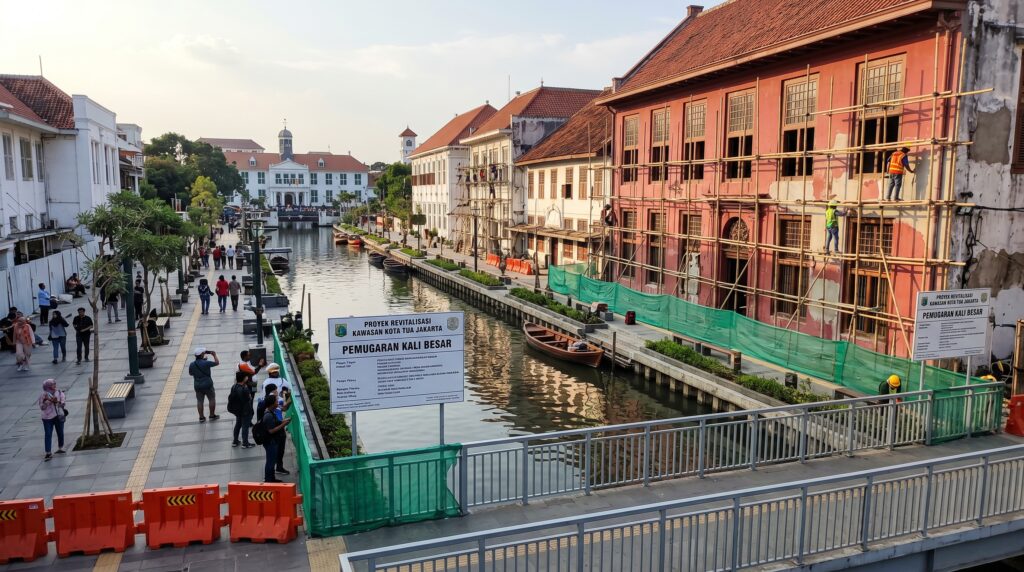
The revitalization of Kali Besar in the heart of Jakarta’s Old Town (Kota Tua) is a masterclass in urban hydraulic engineering and heritage preservation. Historically the “main artery” of colonial Batavia, this waterway has been transformed from a neglected canal into a sophisticated, pedestrian-centric “Waterfront Escape.” The project, inspired by the Cheonggyecheon in Seoul, utilizes a high-fidelity filtration system to clean the water while creating a floating public space that bridges the gap between 17th-century history and 21st-century urban design.
I. The Floating Walkway and Pedestrian Infrastructure
The most striking architectural feature of the new Kali Besar is the series of floating walkways that sit just inches above the water’s surface. These platforms allow visitors to walk “on” the canal, providing a unique perspective of the surrounding Dutch VOC-era warehouses. The “Discovery” here is the structural flexibility; the walkways are designed to rise and fall with the water levels, ensuring safety during Jakarta’s monsoon season. This infrastructure has reclaimed the canal from being a barrier, turning it into a seamless connection point for pedestrians exploring the historic district.
II. Advanced Water Filtration and Cleansing Systems
Beneath the aesthetic surface lies a complex “Hydraulic Reset.” The Kali Besar project involved the installation of an underground dam and a multi-stage filtration system. This technology separates the polluted city runoff from the main canal, allowing treated, clear water to flow through the visible section of the park. This technical feat has significantly reduced the odor and improved the visual clarity of the water, making the “Waterfront Experience” pleasant for the first time in decades. It is a high-fidelity example of how modern engineering can heal historical environmental damage.
III. Preservation of the VOC-Era “Gudang” and Bridges
The restoration was careful not to overshadow the existing historical landmarks. The project frames the Gudang Gandum (grain warehouses) and the iconic Jembatan Kota Intan (the last remaining Dutch drawbridge). The design of the new railings and lamp posts uses a minimalist, industrial aesthetic that complements rather than competes with the 300-year-old red-brick architecture. Walking through this zone is like moving through a “Living Timeline,” where the rusted iron of the old bridge stands in harmony with the clean glass and steel of the modern observation decks.
IV. Public Amenities and Urban “Pocket Parks”
The edges of the canal have been widened into “Pocket Parks” filled with drought-resistant greenery and ergonomic seating. These spaces act as a “Social Hub,” where Jakartans from all walks of life gather. The logistics of the layout prioritize accessibility, with ramps and wide paths that make the entire waterfront wheelchair and stroller-friendly. The integration of modern public art installations along the banks provides a “Creative Pulse,” making Kali Besar not just a historical site, but a vibrant part of Jakarta’s current lifestyle scene.
V. The Sunset “Heritage” View
For the best experience, visit Kali Besar as the sun begins to set. The high-fidelity lighting design kicks in, illuminating the historical facades and the water’s surface in a warm, golden glow. The reflection of the colonial buildings in the now-clear water creates a cinematic atmosphere perfect for photography. It is a moment of “Urban Serenity” in the middle of Jakarta’s chaos, proving that with strategic restoration, even the most crowded metropolis can provide a space for quiet reflection and historical appreciation.