The “Kota Tua” or Old Town district is the architectural epicenter of Jakarta’s colonial past. While the main square of Fatahillah is often crowded with tourists, the true adrenaline for an adventurer lies in the peripheral shadows—the crumbling warehouses, the high-walled alleys, and the ancient harbor that still breathes the salt of the Java Sea. Exploring these spots requires a sense of curiosity and a willingness to step off the paved paths. It is an “Urban Adventure” that reveals the raw, unpolished layers of a city that was once the most important port in the Southern Hemisphere.
I. Rooftop Scouting in the Abandoned Warehouses
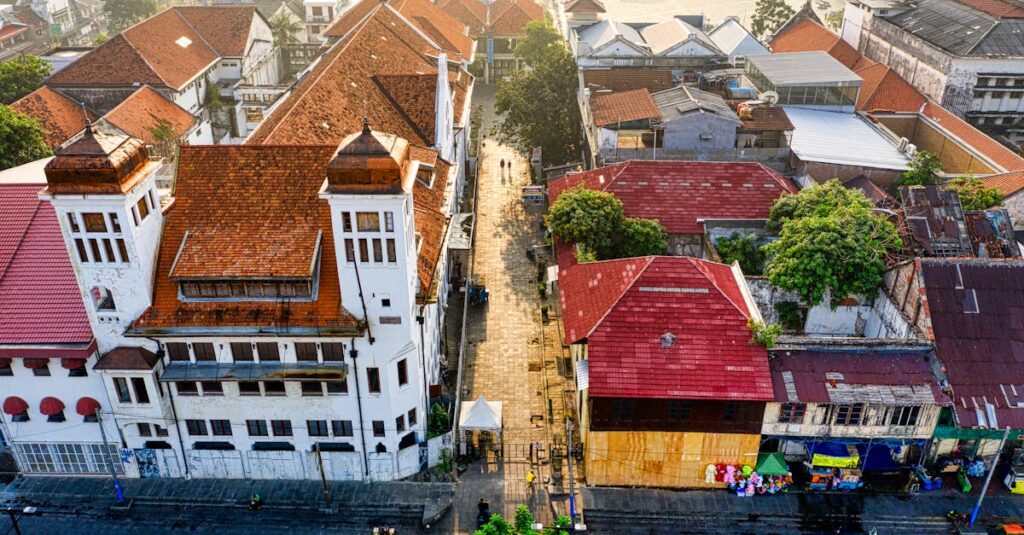
Beyond the restored museums lie massive, derelict warehouses (Gudang) that once stored spices worth more than gold. For a unique thrill, find your way to the accessible rooftops of these sturdy brick structures. From this vantage point, you can see the complex “red-roof” landscape of the old city, a view that is hidden from the street level. Navigating these historic shells offers a tactile connection to the 17th century, where you can touch the original Dutch masonry and see the weathering of time on Jakarta’s oldest skyline.
II. The “Secret Gate” Cycling Route to Sunda Kelapa
Avoid the main roads and rent a vintage bicycle to navigate the narrow back-alleys leading toward the Sunda Kelapa Harbor. These “hidden” routes take you through residential pockets where life has remained unchanged for decades. The thrill peaks as you emerge from the tight alleys into the sudden, vast expanse of the harbor, where the massive wooden Pinisi schooners are lined up. Navigating through the bustling activity of porters and giant ships on two wheels is a high-fidelity immersion into the living history of Jakarta’s maritime soul.
III. Tunnel Hunting Beneath the Historic Foundations
Several colonial buildings in Kota Tua were designed with intricate drainage and storage tunnels, some of which are accessible through guided “Heritage Tours” or by exploring the basements of converted cafes. These dark, cool corridors offer a stark contrast to the heat of the Jakarta sun. Venturing into these underground spaces provides a sense of “urban archaeology,” where the muffled sounds of the city above create a hauntingly peaceful atmosphere. It is an adventure in perspective, seeing the city from its literal foundations up.
IV. The “Hidden Museum” Crawl in Kali Besar
While everyone visits the Wayang Museum, the true explorer seeks out the smaller, private collections tucked away in the heritage buildings along the Kali Besar canal. These spots often house rare maritime maps, ancient coins, and forgotten artifacts of the spice trade. Finding these museums is half the fun, as they are often unmarked. Stepping into these quiet, dust-moted rooms feels like discovering a secret archive, offering a quiet escape into the intellectual heart of the old city.
V. Twilight Photography in the Unrestored Alleys
As the sun sets, the “unrestored” parts of Kota Tua—the areas still waiting for revitalization—become a playground for photographers. The way the golden hour light hits the moss-covered walls and the rusted iron gates creates a moody, “Cinematic Noir” aesthetic. The adventure lies in chasing the light through the labyrinthine streets, capturing the juxtaposition of ancient ruins against the modern energy of the city. It is a peaceful yet exhilarating way to document the fading echoes of Batavia before they are transformed by modern development.