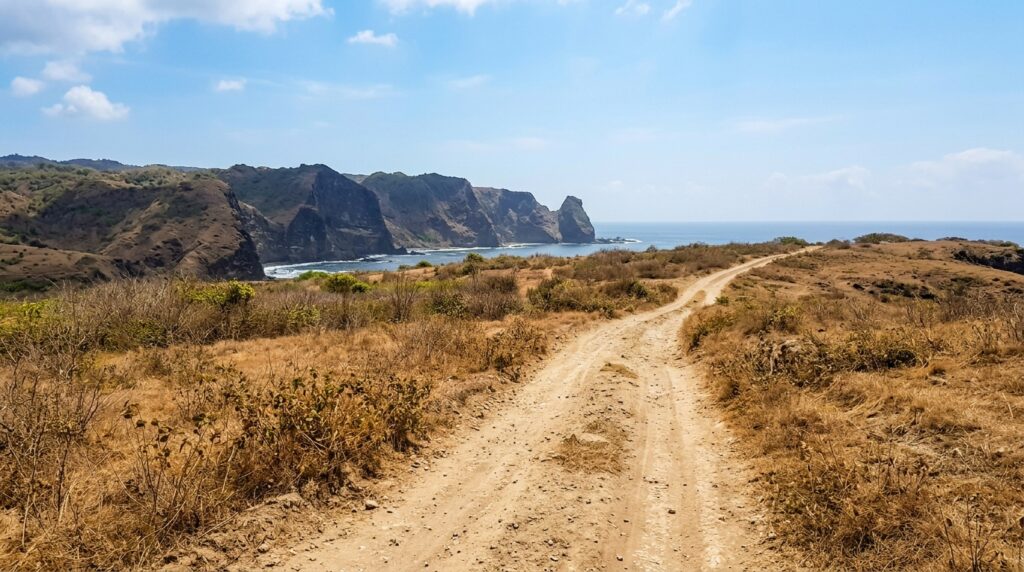
While the southern coast of Lombok around Kuta has transformed into a bustling hub for surfers and digital nomads, the southwest peninsula remains a “forgotten” paradise. This rugged corner of the island, characterized by winding coastal roads and dramatic limestone cliffs, hides some of the most pristine white-sand beaches in Indonesia. For those seeking a “True Escape,” these shores offer absolute silence, broken only by the rhythmic pulse of the Indian Ocean. Traveling here requires effort—often involving long drives through traditional villages and unpaved tracks—towing the line between a simple beach trip and a genuine expedition into the wild.
Pantai Mekaki
is the crown jewel of the southwest, a colossal crescent of sugar-white sand framed by towering emerald hills. Located at the end of a scenic, winding road in the Pelangan area, this beach is often completely empty, save for a few local fishermen. The waves here are powerful and majestic, reflecting the raw energy of the open sea, while the sheer scale of the bay provides a profound sense of isolation. There are no beach clubs or luxury resorts on its immediate shores; instead, you find a vast, “untouched” landscape that invites deep contemplation. It is the ultimate destination for those who want to experience the grandeur of nature without the filter of modern tourism.
Pantai Nambung
situated near the village of Buwun Mas, offers a geological spectacle that feels like a secret kept by the earth itself. The beach is famous for its “Saltwater Waterfall,” a natural phenomenon where massive waves crash against a jagged coral cliff, sending cascades of white foam tumbling back into the sea like a river. Beyond this spectacle, the beach stretches out into a calm, shallow lagoon during low tide, perfect for a solitary walk along the shimmering shoreline. The journey to Nambung takes you through rolling savannahs and coastal forests, reinforcing the feeling that you have left the modern world far behind in search of something ancient and raw.
Pantai Teluk Sepi
literally translating to “Quiet Bay”—lives up to its name with haunting accuracy. Tucked into a deep, protected inlet near Sekotong, the waters here are as still as a mountain lake, mirroring the surrounding dry-forest hills in a perfect turquoise reflection. Because the bay is so sheltered, it is a sanctuary for stillness, making it an ideal spot for “Silent Meditation” or a quiet swim in crystal-clear water. The absence of waves and wind creates an atmosphere of total equilibrium, offering a mental escape for those who find the typical roaring surf of Lombok’s south coast too overstimulating.
Pantai Desert Point (Bangko-Bangko)
while legendary among the global elite surfing community for having one of the world’s longest left-hand breaks, remains a rugged “Escape” for non-surfers as well. Located at the extreme tip of the southwest peninsula within a protected forest reserve, the area feels like the edge of the world. The landscape is arid and dramatic, with rocky outcrops and ancient trees leaning over the water. There is a primitive beauty to Bangko-Bangko; the lack of high-end infrastructure means that life here revolves strictly around the tides and the sun. It is a place for the “Hardcore Escapist” who values raw, unfiltered environment over manicured luxury.
Pantai Ela-Ela
is a hidden cove tucked away in the Sekotong Barat region, offering a “Boutique Wilderness” experience. This beach is characterized by its calm, shallow waters and a shoreline dotted with mangroves and traditional wooden outriggers. It is a gateway to the secret “Gilis” of the southwest, but the beach itself remains a quiet haven where the sand is soft and the water is incredibly clear. For the traveler, Ela-Ela provides a gentle transition into the wild—a place where you can enjoy a fresh coconut under the shade of a Ketapang tree while looking out at the distant, blue outlines of the secret islands, knowing that you are one of the few who chose to venture this far west.