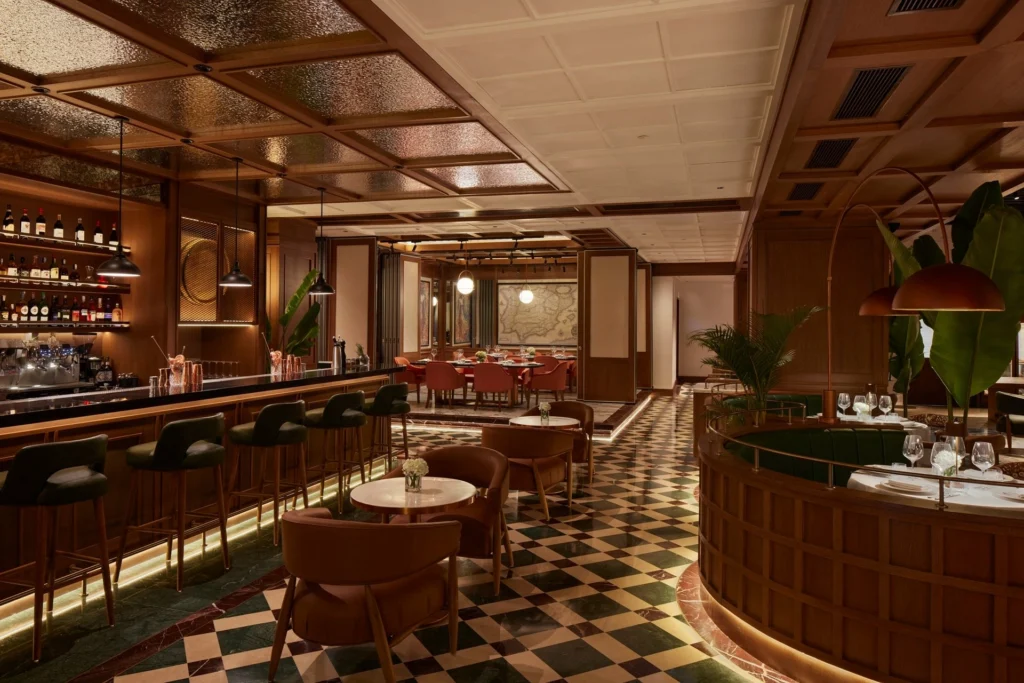
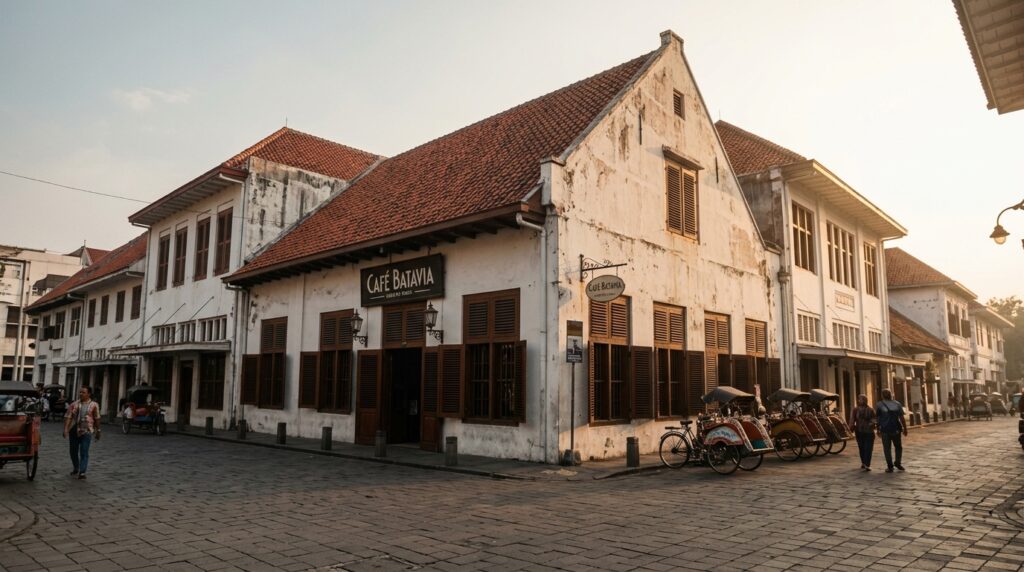
In the heart of Kota Tua, the echoes of the 18th century come alive through a culinary journey that bridges the gap between the Dutch colonial era and modern Indonesia. This historic district is home to beautifully restored landmarks where the architecture serves as a silent witness to centuries of history. Dining here is not just about the food; it is a cinematic experience where soaring ceilings, teakwood shutters, and grand chandeliers provide a majestic backdrop for romantic evenings and nostalgia-filled gatherings, offering a taste of the “Old Batavia” elegance.
Café Batavia
remains the undisputed icon of the Fatahillah Square, housed in a grand 19th-century building that stands as the second oldest structure in the area. Stepping inside is like entering a time capsule, with its world-famous upstairs salon featuring floor-to-ceiling windows that overlook the historic cobblestone plaza. The menu is a sophisticated blend of classic Dutch-Indonesian “Rijsttafel” and international favorites, served in an atmosphere filled with vintage photographs and the soul-stirring sounds of live jazz. It is the definitive destination for those who wish to soak in the grand colonial ambiance while enjoying a sunset cocktail in a room that has hosted royalty and explorers alike.
Kedai Seni Djakarte
offers a more intimate and artistic take on heritage dining, situated in a charmingly restored building right on the edge of the main square. This spot is beloved for its “vintage-home” feel, featuring rustic wooden furniture, antique memorabilia, and high ceilings that keep the space naturally cool. The culinary focus is on authentic Betawi flavors and classic Indonesian comfort food, served with a simplicity that honors the traditions of old Jakarta. It is a perfect sanctuary for travelers who want to escape the heat of the square and enjoy a quiet, flavorful meal surrounded by the creative energy of Kota Tua’s local art scene.
Historia Food and Bar
is a hidden gem that occupies a beautifully revitalized colonial warehouse, featuring a design that highlights the building’s original brickwork and massive timber beams. The interior is adorned with vibrant murals depicting the history of the spice trade, creating a space that feels both historic and contemporary. The menu celebrates the “flavors of the archipelago,” re-imagining traditional recipes with modern presentation while staying true to the bold spices that once drew the world to Batavia’s shores. Located just a short walk from the Jakarta History Museum, it provides a moody and atmospheric setting for a long, leisurely dinner fueled by history and craft cocktails.
Bangsar Teakhouse
(formerly known as Batavia Kantine) brings a sense of refined, quiet luxury to the district, focusing on the sheer grandeur of colonial-era craftsmanship. The restaurant is defined by its extensive use of dark teakwood and white-washed walls, reflecting the typical architectural style of high-society Batavia. It serves as an elegant retreat where the service is formal and the pace is slow, allowing diners to appreciate the intricate architectural details of the 18th-century structure. The menu specializes in fusion dishes that pair European culinary techniques with local seasonal ingredients, making it an ideal choice for a romantic date or a sophisticated celebration in the heart of the old city.
Acaraki Jamu
provides a unique “Heritage Detox” experience, located in a meticulously preserved corner of a historic building on Jalan Pintu Besar Utara. While it is primarily a café dedicated to the ancient art of Indonesian herbal medicine, its setting and approach to “Jamu” are deeply rooted in the historical significance of the region. The space features high colonial ceilings and minimalist wooden decor, where traditional herbs are prepared using modern manual-brew techniques like V60 and AeroPress. It is a legendary spot for a different kind of “dining” experience, where you can sip on medicinal tonics in a space that feels like an upscale apothecary from the golden age of the spice trade.