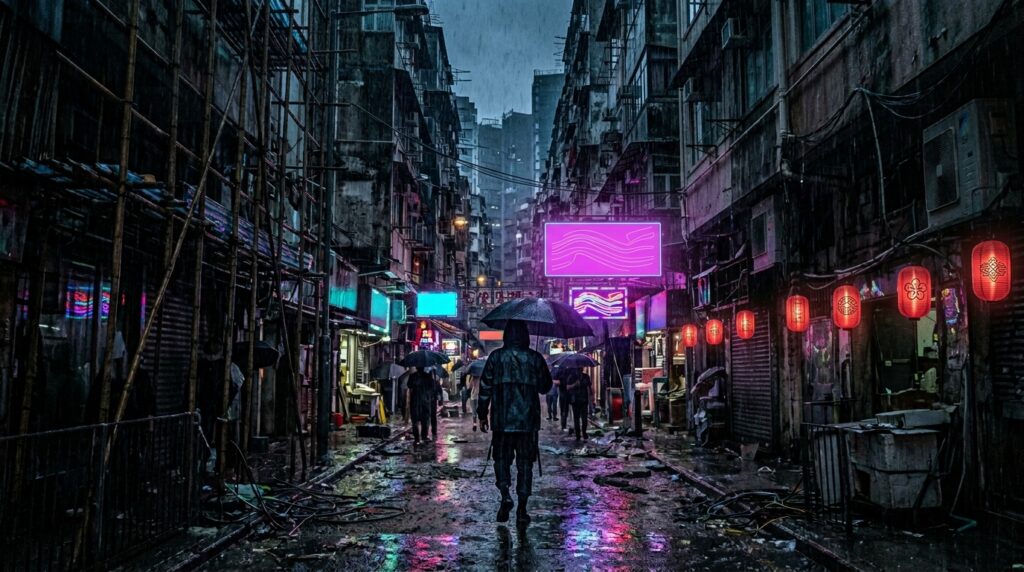
Hong Kong is the birthplace of the cyberpunk aesthetic that has inspired decades of science fiction. Within the district of Mong Kok, this vision reaches its peak. It is a world where the city does not grow outward, but upward and inward, creating a high-definition mirror of urban chaos. When the monsoon rains fall, the asphalt reflects thousands of neon signs in a glow of electric magenta and toxic cyan, turning the ground into a second, shimmering city.
1. The Vertical Jungle of Signage In Mong Kok, commerce is a competitive architecture. Massive neon billboards extend from buildings like mechanical branches, fighting for every inch of visibility over the crowded streets. These signs are held in place by complex webs of steel cables, engineered to survive typhoon-force winds. The result is a dense, multi-layered ceiling of glowing Cantonese characters that blurs the line between the sky and the street.
2. The Asphalt Mirror Rain is the essential filter that makes Mong Kok cinematic. The district’s extreme density creates a “canyon effect” where the heat and light of the city are trapped. When the streets are wet, the dark asphalt transforms into a refractive surface, doubling the intensity of the neon lights. This specular reflection creates a world of light and shadow that feels both futuristic and gritty—a study in high-tech beauty meeting low-life reality.
3. The Beauty of Technical Decay Cyberpunk is defined by the intersection of advanced technology and urban wear-and-tear. In the narrow alleys of Mong Kok, sleek digital displays sit alongside tangled power lines, steaming air conditioners, and rusted industrial piping. This “mechanical grit” provides a visceral contrast to the glowing screens, showcasing a city that is constantly being rebuilt and patched together in real-time.
4. The Architecture of Extreme Density As the most densely populated place on Earth, Mong Kok is a labyrinth of micro-spaces. Narrow corridors are filled with market stalls, hidden diners, and thousands of people moving in a synchronized rush. This extreme human density creates a unique energy—a feeling of being a small cog in a massive, perpetually moving machine. The space is so optimized that even the gaps between buildings become vital arteries for movement and trade.
5. A Neon-Drenched Mirage At night, the district becomes a sensory overload. The smell of street food, the sound of the MTR trains, and the constant hum of electricity create an atmosphere unlike anywhere else. It is a place where the future has already arrived, but it is unevenly distributed—a world where the flickering of a broken neon tube tells as much of a story as the massive LED screens above. To walk through Mong Kok in the rain is to step into a living, breathing labyrinth of light.