Culinary Tourism / Culture
If there is one “language” understood by everyone across the Indonesian archipelago, from Sabang to Merauke, that language is “Padang Food.” However, experiencing Minang cuisine at its source in West Sumatra is a much deeper sensory journey. It is not just about the heat of the chili; it is about the harmony of spices and the long history of a wandering (merantau) culture.
Rendang: More Than Food, A Masterpiece
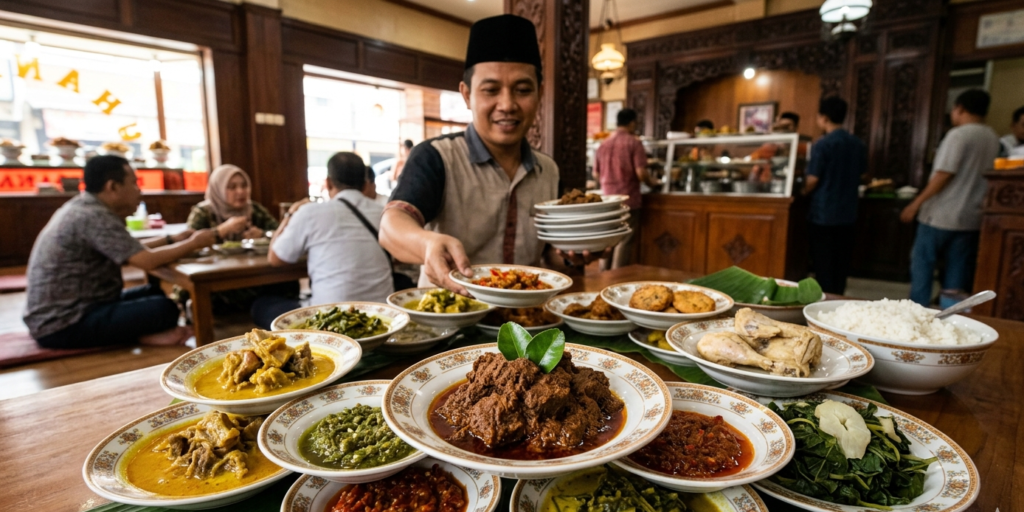
It is impossible to discuss Padang’s culinary scene without placing Rendang at the center. Recognized globally as one of the most delicious foods on earth, authentic Rendang in Padang has a distinct character. Its color is dark—almost black—the result of a cooking process that lasts for hours, or even days, over a low flame.
This process is called marandang, where coconut milk and a dozen spices—such as galangal, ginger, lemongrass, and chili—slowly dry up until they are perfectly absorbed into the fibers of the meat. Rendang is a symbol of the patience and perseverance of the Minangkabau people. Tasting it in Padang offers a smoky, deeply savory sensation with meat that is incredibly tender.
The Tradition of Makan Bajamba: Harmony in Togetherness
A culinary experience in Padang is incomplete without trying the Makan Bajamba tradition. This is a communal dining experience where people sit in a circle on the floor, sharing a large mountain of rice and various side dishes from the same tray.
The philosophy behind Makan Bajamba is equality. Regardless of social status, when sitting in the circle, everyone enjoys the same meal. Here, you can feel the strong sense of brotherhood within the Minang community. The aroma of jackfruit curry (gulai nangka), beef tendon curry (gulai tunjang), and green chili sambal filling the room makes anyone feel welcomed like family.
Spice Secrets That Transcend Time
Why is Padang food so rich in flavor? The secret lies in the use of fresh spices. Traditional markets in Padang, such as Pasar Atas in Bukittinggi, are silent witnesses to how spices are the lifeblood of the region. Chilies are ground by hand on stone pestles, coconut milk is squeezed from the finest coconuts, and the use of turmeric leaves and asam kandis (dried sour fruit) provides a depth of flavor that is hard to replicate.
Furthermore, every dish tells a story. For example, the reason Padang food is often spicy and cooked in coconut milk is linked to the dynamic history of its people. They needed food that was naturally preserved to carry with them during long journeys when they left home to seek their fortune.
Adventures in Legendary “Rumah Makan”
Walking along the streets of Padang, you will find legendary eateries that have stood for decades. A unique highlight is the “service attraction,” where waiters skillfully carry a dozen plates stacked on both arms—a performance art in itself before you even start eating.
To finish your culinary quest, don’t forget a glass of Teh Talua (creamy egg tea) or a plate of Sate Padang with its thick, spicy yellow sauce—the perfect ending for your palate.
Padang’s cuisine is proof that food is a guardian of history. Through a plate of Nasi Padang, we learn about the natural wealth of Sumatra, the sincerity of its people, and a cultural heritage that never fades. If you claim to be a food lover, a journey to the Minang highlands is not just an option—it is a necessity.